
The myths and facts about IEPs never seem to end. The Individualized Education Program (IEP) process is a cornerstone of special education, yet it’s often misunderstood. Those misunderstandings can create unnecessary anxiety for parents, educators, and students in a situation that’s already stressful.
Let’s bust 25 common myths about IEPs and uncover the facts that every IEP team member should know.
1. Myth: The IEP process is only for children with severe disabilities.
Fact: The IEP process is for any student with a disability that affects their learning, whether mild, moderate, or severe. For example, a student with ADHD or dyslexia may qualify for an IEP even if they don’t have visible or severe impairments.

2. Myth: Parents have no say in the IEP process.
Fact: Parents are essential members of the IEP team. They provide input, participate in meetings, and collaborate to create goals tailored to their child’s needs. Parents’ insights about their child’s strengths and challenges are invaluable.
3. Myth: Once an IEP is created, it cannot be changed.
Fact: IEPs are living documents. They are reviewed annually but can be updated anytime if necessary. Parents can request a meeting to make changes if they feel the plan is not meeting their child’s needs.
4. Myth: The IEP is a one-size-fits-all document.
Fact: The “I” in IEP stands for individualized. Each IEP is customized to address the specific strengths, needs, and goals of the student, ensuring that support is personalized.
5. Myth: Students with IEPs are segregated from general education classrooms.
Fact: All students with IEPs are, by federal law, to be included with their general education peers in all school activities, of which many of our students will do so with accommodations and supports. The goal is to provide education in the least restrictive environment (LRE). For most of our students, that means they receive special education supports and services in the general ed classroom.
6. Myth: Teachers are solely responsible for implementing the IEP.
Fact: The IEP is a collaborative effort involving teachers, special education staff, counselors, administrators, parents, and sometimes the student. Everyone contributes to ensuring the plan’s success.
7. Myth: IEPs only address academic goals.
Fact: IEPs can include goals for social skills, emotional regulation, life skills, and behavioral needs. For instance, a child may have goals for improving peer interactions or managing anxiety.
8. Myth: Students with IEPs will always need one.
Fact: Some students may “outgrow” the need for an IEP if they make significant progress. Every 3 years a student is re-evaluated to determine if the student still requires special education supports and services.
9. Myth: An IEP guarantees academic success.
Fact: While an IEP provides the necessary support, success depends on many factors, including effort, quality of support, and family collaboration.
10. Myth: IEPs are only for students who are failing academically.
Fact: A student doesn’t need to fail to qualify for an IEP. Bad grades do not equal an IEP, and likewise – good grades do not mean a student will not qualify for special education services. If a disability impacts learning or access to education, the student may be found eligible, even with average or above-average grades.
11. Myth: An IEP will “label” a student and limit their potential.
Fact: An IEP is a tool to support success, not a label. It provides resources to help students reach their full potential without diminishing their abilities.
12. Myth: Students with IEPs cannot participate in extracurricular activities.
Fact: Students with IEPs have the right to participate in sports, clubs, and field trips, with accommodations ensuring they have equal access.
13. Myth: General education teachers aren’t responsible for IEPs.
Fact: General education teachers must implement IEP accommodations and modifications, as many students with IEPs spend most of their time in general education classrooms. They should also be collecting data on IEP goals, and are also permitted to implement SDI when under the direct supervision of a special education teacher.
14. Myth: The IEP process takes too long to start.
Fact: Federal law (IDEA) sets strict timelines. Schools typically have 60 days after parental consent to complete evaluations and determine eligibility, but check with your state regulations and laws too.
15. Myth: Parents must accept the school’s recommendations.
Fact: Parents can disagree with recommendations, request changes, and even pursue independent evaluations or mediation to ensure their child’s needs are met.
16. Myth: Accommodations and modifications are the same.
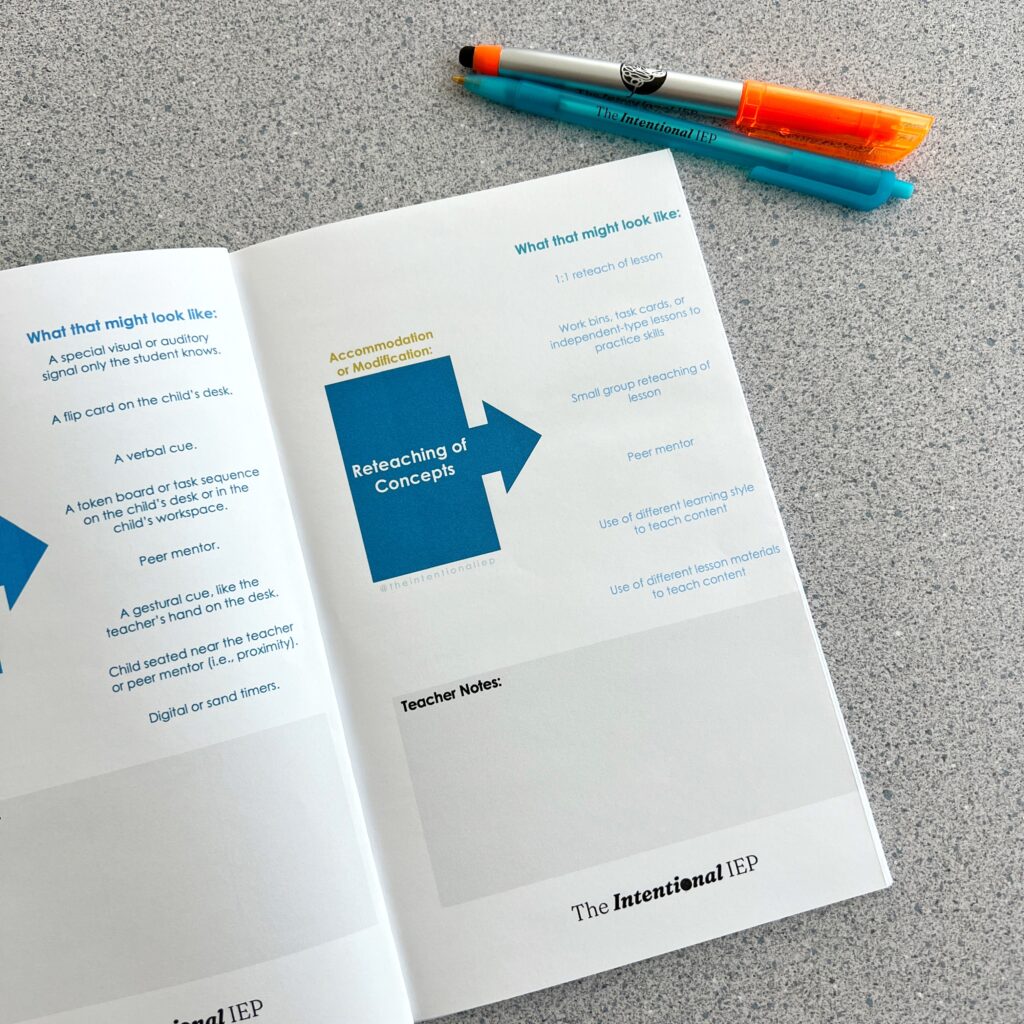
Fact: Accommodations change how a student learns (e.g., extended test time), while modifications change what a student learns (e.g., simplified content).
17. Myth: Students with IEPs automatically get extra time on tests.
Fact: Extra time is only provided if it’s listed in the IEP based on individual needs. This accommodation is not a blanket provision and should only be provided to a student via the IEP if it is deemed as a need.
18. Myth: A 504 Plan is the same as an IEP.
Fact: While both provide support, an IEP includes specialized instruction under IDEA, whereas a 504 Plan provides accommodations under the Rehabilitation Act. A student may also have an IEP and a 504 Plan, in special cases.
19. Myth: Once an IEP is finalized, it is set in stone for the next year.
Fact: IEPs are living, breathing documents and can’t be amended at any time throughout the school year.
20. Myth: IEPs are identical for students with the same disability.
Fact: Each IEP is unique, that’s why the I in IEP stands for Individualized. Even if two students share a disability, their needs and goals will – and should – differ.
21. Myth: IEPs are only for public school students.
Fact: While IEPs are mandated for public schools under IDEA, private schools may also create similar individualized plans. Some students in private schools may be eligible for services through public school districts.
22. Myth: An IEP guarantees funding for all services listed.
Fact: While an IEP specifies the services a child requires, funding may depend on district resources. Schools must ensure services are provided, but parents may need to advocate for adequate funding and support.
23. Myth: Parents are not allowed to bring an advocate or attorney to IEP meetings.
Fact: Parents have the right to bring an advocate, attorney, or support person to IEP meetings. This can help ensure their child’s needs are met and that they fully understand the process.
24. Myth: Parents can’t request additional IEP meetings.
Fact: Parents can request meetings anytime they feel changes or discussions are needed. Schools are required to accommodate such requests.
25. Myth: IEPs end automatically when a student turns 18.
Fact: IEPs continue until graduation or age 21 (22 in some states). Educational rights may transfer to the student at 18 unless guardianship arrangements are made.
Understanding the truths behind these myths empowers parents, educators, and students to navigate the IEP process effectively. Remember, the goal of an IEP is to provide personalized support and set every student up for success.
An IEP doesn’t begin when you open the document—and the work doesn’t end when everyone leaves the meeting. There’s baseline data to gather, decisions to make, goals to connect, timelines to manage, services to implement, progress to monitor, and adjustments to make along the way. The Intentional IEP System gives special educators one connected way to manage all of it. Build a better system for the IEP work you’re already doing →