
Attending an IEP meeting as a parent can be a scary and emotional experience. Parents want to make sure that their children are given every opportunity to succeed, and they are a vital part of a child’s IEP team.
It’s our job as educators to make parents feel heard and to let them know that they are an important part of their child’s team. Following these steps during an IEP meeting can improve the experience that parents have at an IEP meeting.
Helping Parents in an IEP Meeting
Start Building the Relationship Ahead of Time
If possible, don’t wait until the day of the IEP to meet the student’s parents. Start opening lines of communication from the very first day of school and get to know the family. When parents know that you care about their child, it puts them more at ease and provides a better working relationship for everyone.
Introduce Everyone at the IEP Meeting
It is imperative that the parent knows who is interacting with their child. Take time at the very beginning of the meeting to introduce everyone at the IEP table and explain their roles (this is exponentially vital if this is a pre-referral meeting or eligibility meeting).
Parents may not know what a building coordinator or a school psychologist is or does. When a parent understands what role each person plays and why, they will be better equipped to help make decisions about their child.

Take the Parent’s Needs Into Account
Sometimes parents need an interpreter for American Sign Language or in their native language. Arrange for this well in advance of the meeting, and be sure to introduce the interpreter.
Parents may also need to attend the IEP meeting over the phone or may need transportation to the school to attend the meeting. Take these needs into account. Work with your district to arrange transportation if necessary. Involve the parent over the phone as much as possible.
If the parent cannot make it to the meeting in person, consider having the meeting over Zoom or the school’s conferencing software. Just be sure that the parents understand how to use it and have a strong internet connection at home.
An engaged, involved parent is an integral part of the IEP team – whether they agree or disagree with the team’s findings, involved is best.
Start Positive
After introductions, move to stating positive statements about the student.
IEP meetings can sometimes take a negative turn if the parent is receiving bad news from an evaluation or if a child has not met their IEP goals. Beginning the meeting on a positive note can help balance this. Plus, parents love to hear good things about their kids!
Try saying something like, “I love working with [Student] because….” or “[Student] has improved so much in math area this year!”
Explain Jargon
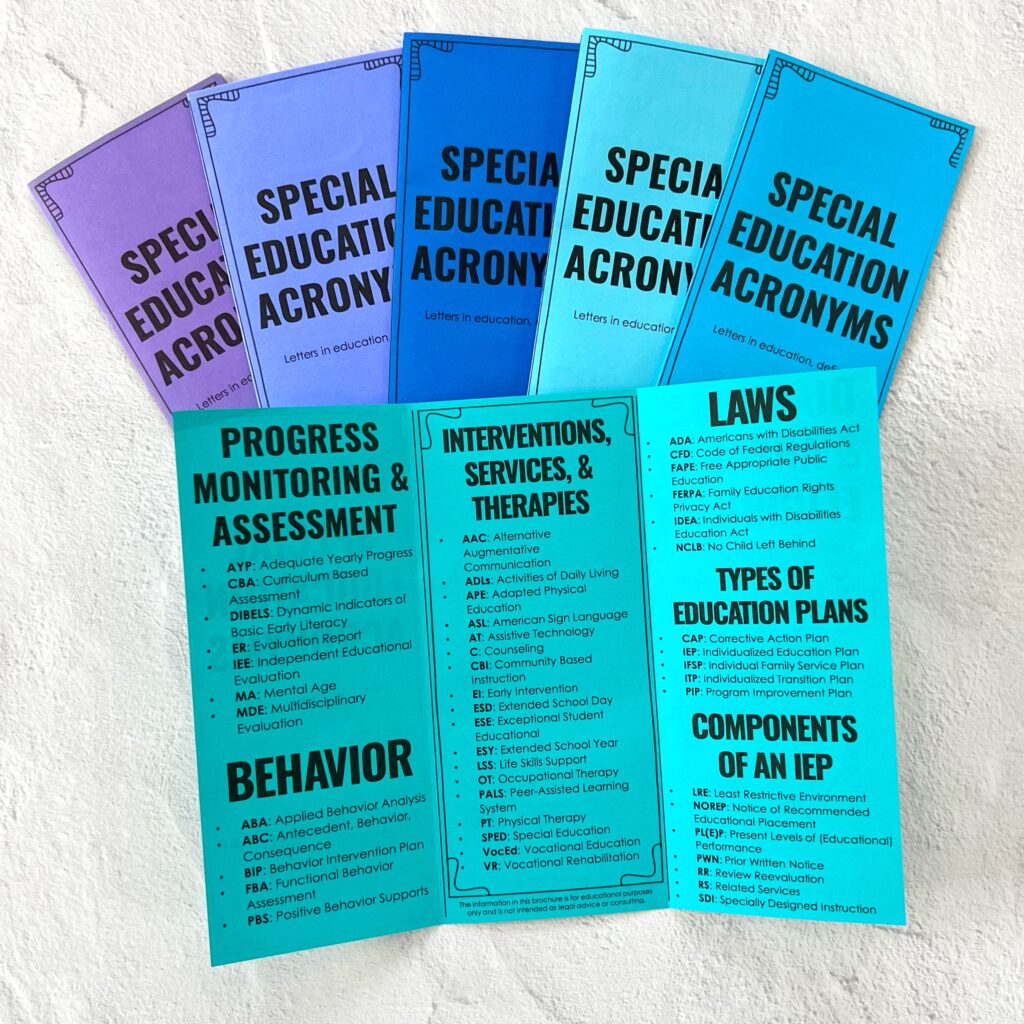
Not all parents understand the acronyms and jargon that go along with special education. When using an acronym, explain what it stands for and what it means.
For example, when explaining something like “least restrictive environment,” give an example of what it means.
It’s also important to normalize asking questions about phrases or acronyms that may not be understood. Equate an IEP meeting to going to a mechanic or doctor and needing to ask clarifying questions to make sure you know what is going on.
We all know there are a TON of acronyms included in an IEP. By having this brochure on hand in IEP meetings, you can help your parents, and even other team members better understand what each acronym stands for.
Watch the Seating Arrangement
Avoid having staff sit on one side and parents on the other. This creates a feeling of “us vs. them” and can be very uncomfortable for parents.
Also – make sure there are enough seats for all IEP team members.
Address Parents by Their Names
Avoid using the terms “mom” or “dad” in the meeting, and address the parents by their first names (or their preferred names).
Be Honest
Always tell the truth in an IEP meeting and be upfront about what the school can and cannot do. Honesty is definitely the best policy when it comes to making families feel more comfortable with the IEP process.
Leave Time for Questions
IEPs contain a huge amount of information, so it is important to not only leave time for questions at the end of the IEP overview, but also at the end of each section.
This is especially important when the parent is attending over the phone. Without being able to see the parent and read their body language, you may not know if the parent is confused, intimidated, or upset.
Leave time for parents to ask questions and express their feelings about the IEP.

Parents are a crucial part of the IEP team! By making the parent feel comfortable and understood, they will be more likely to contribute to the IEP process and become involved in their child’s education.

Your district’s IEP platform gives you a place to document the IEP. The Intentional IEP System was built for the work happening around it. Created by a veteran special educator, the system brings together practical workflows, professional guidance, screeners, goals, data tools, planning support, and more to help you confidently manage the IEP process without handing your professional judgment over to software. Explore the educator-led IEP management system →