
Behavior IEP goals can quickly become overwhelming, especially when a student has a lot of IEP goals and the data feels impossible to manage. Many special education teachers use frequency charts with tally marks because that is what they were taught and it’s really simple to implement. But over time, the data stops making sense. You collect numbers all day, yet you still cannot explain why behaviors happen or how to change them.
If you are tracking behavior IEP data and it feels messy, confusing, or unhelpful, you are not alone. The problem is not the student or the student’s behaviors. It is the data system. This post will walk through how to look at behavior goals through a functional lens and how to choose data collection methods that actually tell the student’s story.
Why Frequency Charts Often Fail for Behavior IEP Goals
Frequency data answers one question: How many times did a behavior happen?
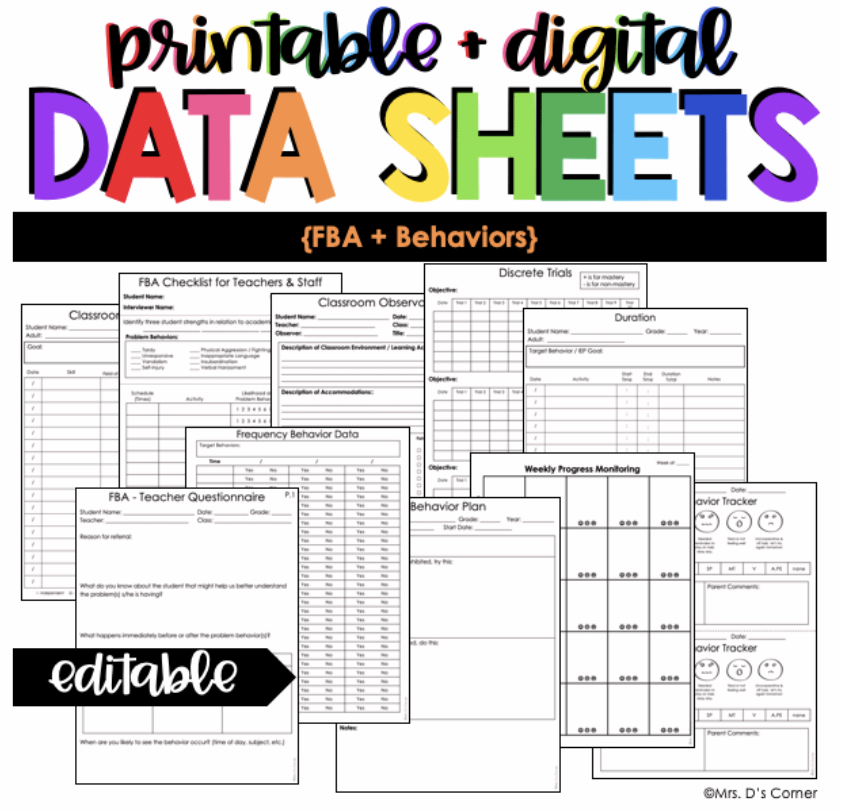
That sounds helpful, but for many behavior goals, it leaves out the most important information. Frequency does not tell you what caused the behavior. It does not tell you what the student was trying to get or avoid. It does not show patterns, escalation, or attempts to use replacement skills.
When a student has many behavior goals, tally marks can make everything look equally severe. A brief refusal and a long escalation can look the same on paper. This makes it hard to analyze progress and even harder to adjust supports.
Behavior data should explain behavior, not just count it.
Start by Looking at the Function of Behavior
Before changing how you collect data, you need to look at why the behavior is happening. Many behavior IEP goals that look different on paper are actually connected by function.
Common behavior functions include escape from demands, access to tangibles, attention from others, and sensory regulation. When you group behaviors by function instead of tracking each one separately, patterns become clearer.
A student may refuse to ask for help, refuse to use a calm down strategy, and refuse to explain what triggered them… but these behaviors often serve the same purpose: avoiding a demand or emotional work. So tracking them separately is going to hide that connection.
Grouping Behaviors Instead of Tracking Eleven Separate Goals
When a student has a lot of behavior goals, it often helps to think in behavior groups instead of individual skills. For example, behaviors related to refusal and avoidance often belong together. Behaviors related to stealing, sharing, or turn taking often point to access to items or control. Behaviors like threats or unsafe hands may be about attention or communication. Sensory behaviors may appear across the day and need a different lens.
This does not mean ignoring individual goals. It means choosing data that captures the pattern behind them.
Choosing Better Data Collection Methods
Different behavior functions require different types of data, because one method will not work for everything.
- For behaviors related to escape or refusal, a simple ABC format works better than frequency. Track what happened before the behavior, what the student did, and what happened after. Add how long it took for the student to return to a calm state. This shows whether refusal leads to escape and which demands are the biggest triggers.
- For behaviors related to tangibles or control, event recording with outcomes works well. Track what item was involved and how the situation ended. Did the student gain access. Did they return the item. Did an adult step in. This tells you if the behavior is working for the student.
- For attention seeking or communication behaviors, short ABC notes with a low, medium, or high intensity rating can be enough. This helps staff respond consistently and avoid reinforcing behaviors without meaning to.
- For sensory and regulation needs, time sampling is often more helpful than tallies. Check in during set time blocks and note whether the student was regulated or dysregulated and whether a strategy was used. This shows patterns across the day without over counting behaviors.
Shift the Focus From Behaviors to Attempts
One of the most powerful changes you can make is to track attempts instead of only problem behavior.
- Did the student attempt to ask for help? Did they attempt to use a strategy? Did they attempt to return an item, even with support?
Tracking attempts tells a growth story. It shows skill building, not just mistakes. It also gives IEP teams stronger data when discussing progress, changes, or next steps.
Why Token Systems Sometimes Stop Working
Many classrooms use token systems or classroom money to reinforce behavior. These systems can work, but only when they match the function of behavior.
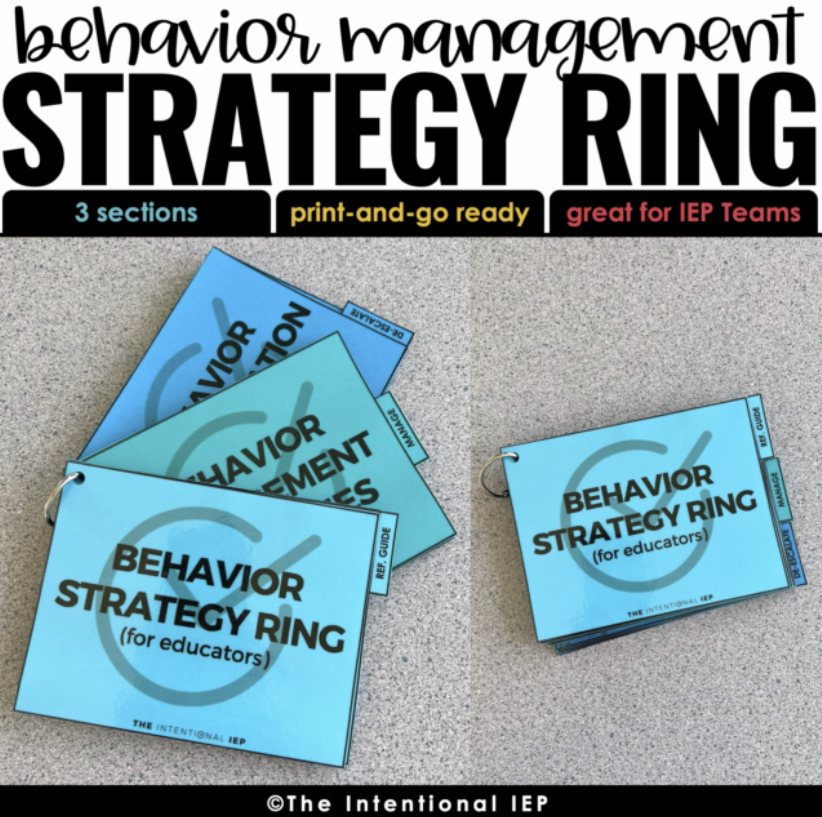
For example: if a behavior is about escaping work, earning classroom dollars may not compete with relief from the demand. Or if a behavior is sensory based, earning classroom dollars may not matter in the moment. If access to items or control is the function, delayed rewards often fail.
Reinforcement needs to be immediate, clear, and connected to the replacement skill you want to see. Data helps you figure out what that should look like.
Good behavior data should help you answer clear questions: what triggers the behavior, what keeps it going, what skills the student is trying to learn, and what supports are actually helping? If your data is not answering those questions, it is time to change the system, not work harder at collecting more tallies.
Behavior IEPs work best when data is intentional, functional, and realistic for real classrooms. When data tells the full story, teams make better decisions and students get better support.
Writing the IEP is only one part of managing it. The Intentional IEP System helps special education teachers manage the work before, during, and after the meeting—from baselines and goals to timelines, implementation, progress monitoring, and everything in between. Instead of piecing together another resource every time something comes up, you’ll have one educator-led system designed to help you know what to do, have what you need, and know what’s next. See how The Intentional IEP System works →