
No one walks into an IEP meeting hoping it becomes that meeting. You know the one. A parent asks a question the team was not prepared to answer. Someone responds too quickly and sounds defensive. A concern that has been building for months finally comes out. The data do not match what the family sees at home. One team member keeps talking over everyone else while another goes completely silent.
Then the whole tone of the IEP meeting changes.
I have been in enough IEP meetings to recognize that shift before anyone says a word about it. Shoulders tighten, answers get shorter, you start seeing “the look”, and team members stop listening because they are preparing their next response.
If you are the special education teacher or case manager leading the IEP meeting, you may immediately feel responsible for fixing everything. But here is something I learned after years of sitting at IEP tables: you do not have to resolve every disagreement in that moment.
Sometimes the most productive thing you can do is slow the meeting down, make sure the real concern is understood, and prevent the team from making a rushed decision just because everyone wants the tension to end.
A difficult IEP meeting is not automatically a failed IEP meeting. What matters is what the team does once things begin to go downhill. Here’s what to do when you notice the IEP meeting starting to go downhill.
Pay Attention to the Shift
IEP meetings do not usually fall apart because of one dramatic moment. More often, the meeting starts slipping a little at a time, and it may happen over time – not all in one IEP meeting.

A parent asks the same question in several different ways because they do not feel it has been answered. A team member starts repeating policy instead of addressing the concern. Someone says, “We don’t do that here,” and the conversation shuts down. Maybe The team begins defending what has already been provided instead of examining whether it has been effective. Or maybe everyone starts discussing services, placement, or accommodations before agreeing on the student’s current needs.
When you notice this happening, resist the urge to speed up.
As a newer special ed teacher, I thought that if I kept the agenda moving, I could get the IEP meeting back under control. Usually, moving faster only made people feel more rushed and less heard.
Instead, I’ve learned to pause. You might say: “I want to slow us down for a minute because I think there’s an important concern here that we haven’t fully answered.”
That sentence does not assign blame. It simply acknowledges what everyone in the room can already feel.
Figure Out What the Conflict Is Actually About
The first concern someone says out loud is not always the real concern. A parent may be asking for a particular accommodation because they are worried their child cannot access instruction. A teacher may be resisting the accommodation because they do not understand how it would work in the classroom. An administrator may be focused on the wording because they are thinking about staffing or district procedures.
Everyone may appear to be arguing about one checkbox, but they are actually talking about three different problems. This is why clarification matters. Try asking: “Can you tell me more about what you are seeing that makes this support feel necessary?” OR “What is the biggest concern you want us to address before we leave today?”
Do not assume you know what a parent means because you have heard a similar request before. Families do not experience school through our systems, paperwork, and special education terminology. Sometimes what sounds like a request for a specific service is really a request for reassurance that someone sees how much their child is struggling.
The same is true for educators. A general education teacher who says, “That won’t work in my classroom,” may not be refusing to support the student. They may be telling you (mind you, poorly telling you) that they do not understand the support or do not have what they need to implement it. Clarifying the concern helps the team solve the right problem.
Validate Without Making Promises
One of the most useful lessons I learned as a special ed teacher was that I could acknowledge someone’s experience without immediately agreeing with their proposed solution.
New teacher me was afraid to validate a concern if I was not sure the data supported the request. I worried that saying, “I understand,” would sound as though I were agreeing to a particular service, goal, or placement. Fun fact: it does not.
If you find yourself in this situation, you can say:
- “I can understand why that would be concerning.”
- “Thank you for explaining what you are seeing at home.”
- “I hear that you do not feel the current support is enough.”
- “I want to make sure that concern is captured accurately.”
These statements do not commit the IEP team to a decision, but they do communicate that the person’s input matters.
Be careful, though, not to use validation as a script before immediately dismissing the concern. People can tell when “I hear you” really means “I am waiting for you to stop talking.” If you say you want to understand, ask a follow-up question. If you say you will document the concern, document it. If you do not know the answer, say that you do not know yet.
Regulate Yourself Before Responding
It is easy to tell others on the IEP team to “stay calm.” It is much harder to do when someone is criticizing an IEP you spent hours writing or questioning whether the school has appropriately supported a student. Even when the concern is not directed at you personally, it can feel personal. Your body often reacts before your brain catches up. You may speak faster, interrupt, overexplain, or pull up every data sheet you have in an attempt to prove that you did your job.
Over-explaining is one of my own personal warning signs – that’s when I get defensive and because of that, I want to provide more context. But more words do not always create more clarity, especially when the other person does not feel heard yet.
Before responding, take a breath. Slow your voice. Look at your notes before you answer. If you need a moment, take one. Use your professional judgement to make calls for breaks, even when it’s just for you.

You can also ask another IEP team member to speak to their area of expertise. The case manager does not have to carry the entire meeting or answer every question alone.
Always Return Back to the Student
“We all want what is best for the student” can be a helpful reminder, but it can also sound dismissive when it is used too quickly. Of course everyone wants what is best for the student. The disagreement is usually about what “best” looks like, what the student needs, or whether the current plan is working.
Instead of relying on a generic statement, reconnect the conversation to a specific need: “Let’s go back to the concern about independent work. “What happens when the student is asked to begin a task without adult prompting?” OR “We agree that reading comprehension is affecting access to grade-level instruction. Let’s look at what we have tried, what happened, and what information we still need.”
That gives the IEP team something concrete to discuss, which is what we want because the goal is not to erase disagreement by reminding everyone that we all care about the child. The goal is to move from disagreement to a shared question the IEP team can investigate together.


Use Data to Understand, Not to Win
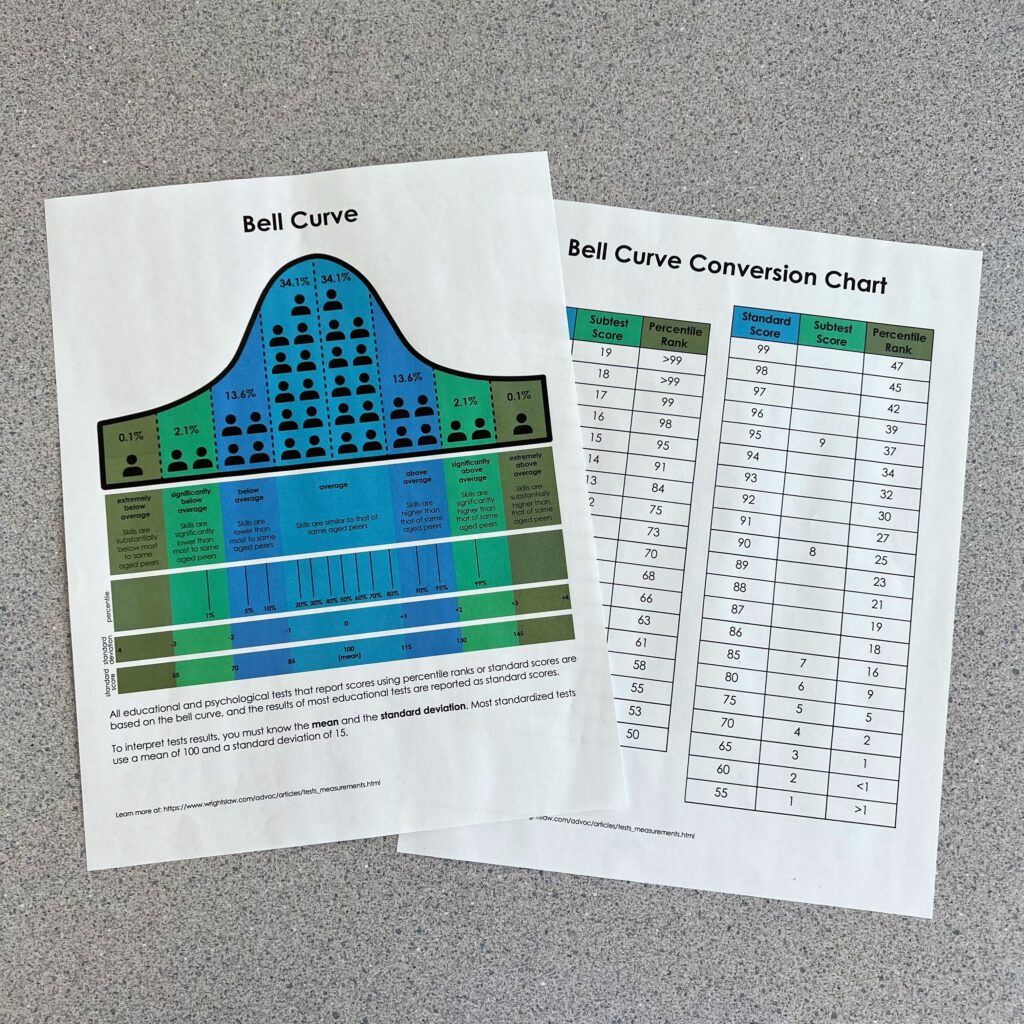
Data can steady a difficult conversation, but only if the data is relevant, understandable, and tells the whole story (re: complete). Saying “the data shows it” is not enough. Because… which data? Collected by whom? Under what conditions? Across how much time? Are we measuring the skill we are actually discussing?
For example, a student may have an 79% average on classroom assignments because the work was completed with repeated prompting, shortened tasks, or one-to-one assistance. That number does not tell the team whether the student can perform the skill independently.
A progress monitoring graph may show growth while the family reports that homework takes two hours and ends in tears. Those pieces of information do not have to cancel each other out. Together, they may show that the student can demonstrate the skill in one setting or under certain conditions but has difficulty generalizing it.
Instead of presenting a number as proof, explain what it means and what it does not tell you. For example:
“On three structured probes, the student answered eight out of ten questions correctly when the passage was read aloud. When the student read independently, accuracy dropped to four out of ten. That difference helps us determine whether decoding is affecting comprehension.”
That is much more useful than saying, “The student got 82%.”
And, if the team does not have enough information to make a responsible decision, say so. Not having every answer during the meeting is uncomfortable. Making a major decision without enough information is worse.
Use Strengths to Make Decisions
Strengths-based language is not about saying three nice things about a student before spending the next hour discussing deficits. A student’s strengths should help the team make decisions, and they should be used to help the student succeed.
If a student is highly verbal but struggles to organize written responses, that strength can help the team determine how to assess understanding. If a student persists with difficult tasks when working beside a peer, that tells the team something about the conditions that support engagement.
Name the Disagreement
Sometimes IEP teams become so focused on keeping an IEP meeting “positive” that they avoid saying the obvious: people disagree. Trying to always keep things positive usually creates more tension, not less.
It’s okay to say:
“I’m hearing that the family believes the current support is not sufficient, while the school team believes the student is making progress with the current plan. Let’s document both perspectives and identify the information behind each one.” OR “It sounds like we agree on the area of need, but we do not yet agree on the appropriate support.”
Naming the disagreement keeps it from spreading into every part of the meeting. It also prevents false consensus. Silence is not agreement. A parent saying “fine” after feeling pressured is not meaningful collaboration. A teacher remaining quiet after an administrator speaks does not necessarily mean the entire school team shares the same conclusion.
As case managers, we need to ensure everyone’s concerns are considered, decisions are based on the student’s individual needs, and the meeting record accurately reflects what occurred.
Be Careful with “We Don’t Do That Here”
Few phrases make an IEP meeting go downhill faster than:
“We don’t provide that here.” OR “That isn’t available at this school.” OR “Our district doesn’t allow it.” OR “We never put that in an IEP.”
Even when there are real staffing, logistical, or procedural considerations to keep in mind, these statements make it sound as though the decision was made before the student was discussed (and predetermination is a fast track to due process).
If you do not have the authority to answer a question, be honest. If the team needs more information, say that. A difficult request does not become easier just because it’s dismissed with a blanket statement.
Know When to Pause the Meeting
Not every IEP meeting should continue simply because it was scheduled for a certain amount of time. And if the team needs a break, I highly suggest you follow your gut and reschedule it for another day/time.
But when should you pause an IEP meeting to reconvene? Here are a couple of times when a pause may be the most appropriate thing to do:
- A required team member or necessary decision-maker is missing.
- New information is introduced that the team needs time to review.
- The team needs more data before making a decision.
- Emotions have risen to the point that people cannot participate productively.
- The meeting is running far beyond the scheduled time and everyone is rushing.
- A serious concern has been raised that should not receive an improvised answer.
Let me clarify: pausing is not the same as avoiding the issue. Before ending the IEP meeting, be specific. Who will gather the information? What question is the team trying to answer? When will the team reconvene? How will the family receive an update? A vague “we’ll follow up” can make a difficult IEP meeting even worse.

Do Not Promise What You Cannot Guarantee
When a meeting is tense, there is a strong temptation to say whatever will calm the room. “We’ll take care of it.” OR “That won’t happen again.” OR “I’ll make sure everyone does this.”
Those promises may sound reassuring because we like to always follow up with “I promise…”, but they can damage trust if you do not have the authority to guarantee them. Instead, use clear, accurate language:
“I will bring that concern to the appropriate person and follow up with you by Friday.” OR “The team can discuss adding that support, but I cannot make that decision by myself.” OR “I can document the concern today and make sure the district responds through the appropriate process.”
Specific follow-through is more valuable than an immediate promise, and it builds better rapport.
Document What Actually Happened
Documentation after a difficult IEP meeting should not read like a defense of the school team. It should accurately capture the concerns raised, information reviewed, options considered, decisions made, and next steps.
Before ending the meeting, you’ll want to summarize your notes. Try something like:
“I want to make sure I have this right. The family is concerned about ____. We reviewed ____. The IEP team agreed to ____. We still need information about ____, and we will reconvene on ____.”
If the family disagrees with a decision, that disagreement should not disappear from the notes because the team reached a different conclusion.
The district is responsible for following its required procedures, including providing appropriate written notice when the team proposes or refuses certain actions. If questions arise about procedural safeguards, dispute-resolution options, or the family’s rights, involve the appropriate district representative rather than improvising a legal explanation at the end of an emotional meeting.
Your role is not to talk a family out of disagreeing. Your role as case manager is to help ensure the parent’s input is heard, considered, and accurately documented.
After the Meeting, Follow Through and Reflect
The work is not over when everyone leaves the IEP meeting room.
Now is when the real implementation work begins, which means: do the follow-ups you promised. If you said you would email by Friday, send the email by Friday… yes, even if the update is that you are still waiting for information.
Then reflect on the IEP meeting honestly:
- When did the tone begin to shift?
- Was there a concern we should have anticipated?
- Did the team have the right data available?
- Was the information explained clearly?
- Did anyone dominate the conversation?
- Did I become defensive or start overexplaining?
- What needs to happen before the next meeting?
This is not about blaming yourself or anyone on the IEP team for someone’s behavior. Some meetings are difficult because trust was damaged long before you entered the room. Some involve years of frustration, staff turnover, inconsistent implementation, or promises that were never kept. You cannot repair all of that in one meeting. But you can be the person who does not add to the damage.
You can follow through. You can document accurately. You can ask better questions. You can admit when more information is needed. And you can prepare differently next time.
A Difficult Meeting Does Not Mean You Failed
I have left IEP meetings replaying every sentence I said, thinking I should have explained that differently, that I should’ve slowed the IEP meeting down sooner, or not let that one comment pass without clarification.
Reflection is part of becoming better at this work, but promise me that you won’t turn every hard meeting into proof that you are bad at your job. Success does not look like a conflict-free IEP meeting. Sometimes success looks like slowing down before the team makes a rushed decision. Sometimes it looks like documenting a disagreement clearly. Sometimes it means admitting that the team needs more information. Sometimes it means reconvening instead of forcing a conclusion. And sometimes it simply looks like staying grounded enough to keep listening when the conversation becomes uncomfortable.
You do not have to control every person in the room. You do not need to have every answer or fix years of mistrust in one meeting. Listen carefully. Explain clearly. Use the available information responsibly and document everything honestly and objectively. And always always follow through on what comes next.
That is how an IEP meeting that starts going downhill can still move the team forward, and keep the student’s actual needs at the center of the conversation.

An IEP doesn’t begin when you open the document—and the work doesn’t end when everyone leaves the meeting. There’s baseline data to gather, decisions to make, goals to connect, timelines to manage, services to implement, progress to monitor, and adjustments to make along the way. The Intentional IEP System gives special educators one connected way to manage all of it. Build a better system for the IEP work you’re already doing →