
Behavior can play a significant role in a student’s education. It can make learning easier or it can make it a lot more challenging.
For students whose behavior hinders their learning, there are specific things that are required and included in their individualized education programs (IEPs).
Let’s break down FBAs, BIPs, and how they relate to a child’s IEP.

What is an FBA?
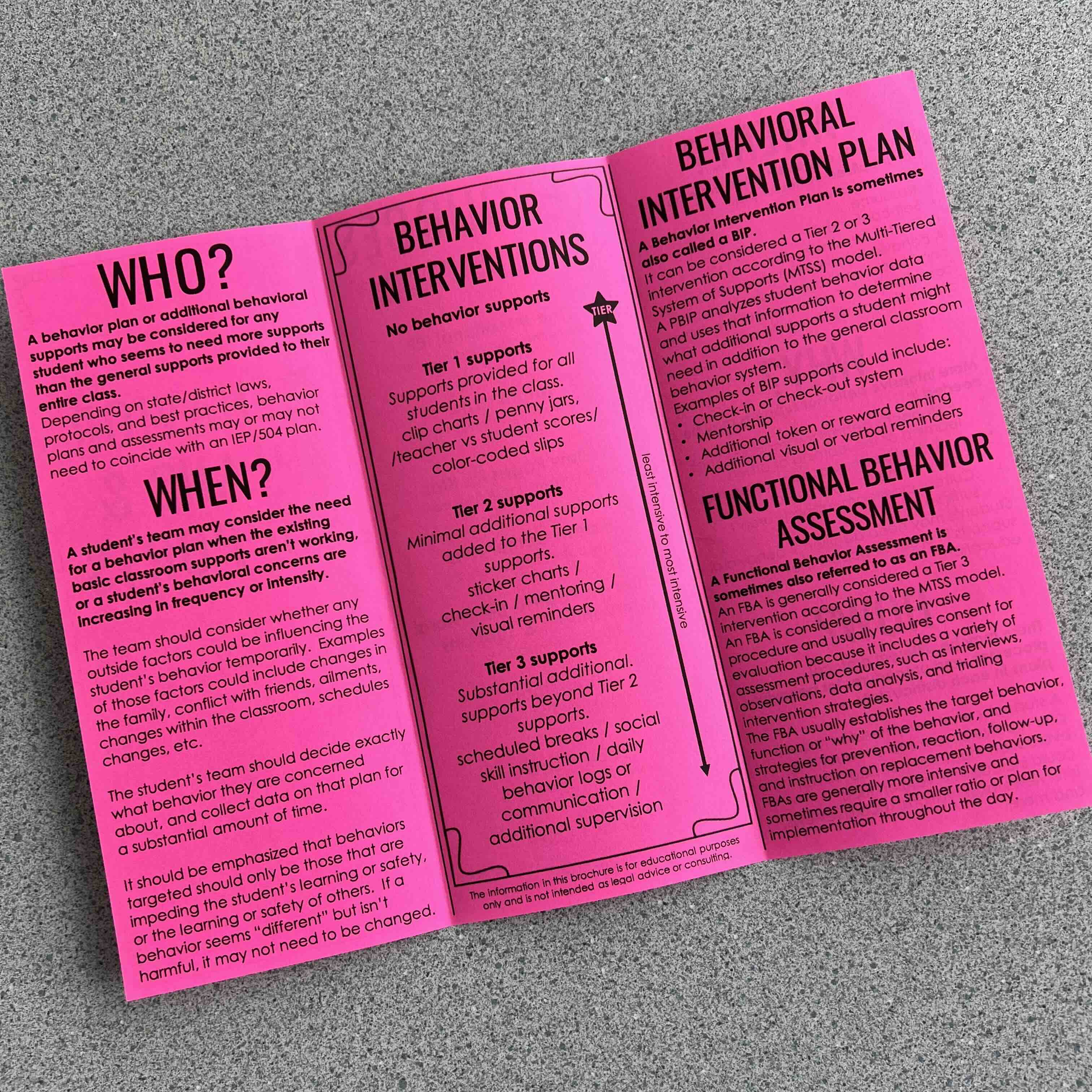
Special education has so many acronyms that it can be difficult to keep them straight. A Functional Behavior Assessment, or FBA, looks at a child’s behavior as a whole.
The purpose of the FBA is to try to determine what is causing the behavior, why the behavior is happening, and what is reinforcing the behaviors. Once the cause is determined, the team can work together to create a Behavior Intervention Plan (BIP) to address the behavior and improve learning. This is a data-driven process, just like the IEP process.
Depending on your school district, it may be anyone from a school psychologist to the special education teacher who completes the FBA. Oftentimes, schools have their social workers, psychologists, or behavior specialists do the behavior assessment, but, again, it varies from district to district.
Data and Evaluation Tools Used in a Functional Behavior Assessment (FBA)
An FBA relies on a combination of data collection methods, direct observations, and assessment tools to identify patterns in a student’s behavior and determine the function of the behavior.
Your data might include:
- ABC Data Collection
- Frequency Data
- Duration Data
- Latency Data
- Interval Recording Data
- Manifestation Determination Review Documents and Data
- Functional Assessment Interview (FAI)
- Motivation Assessment Scale (MAS)
- Functional Analysis Screening Tool (FAST)
- Student Self-Assessments
- Behavior Rating Scales and Standardized Assessment Results
By using both direct and indirect methods of data collection, the IEP team can better get a whole picture view of the student and the behavior.

What is a BIP?
First comes the FBA and then comes the BIP. In this case, BIP stands for Behavior Intervention Plan. In order for the BIP to exist, there has to be an assessment done to determine what is causing the child to exhibit the behavior that is preventing him from learning.
The BIP includes specific components to make sure that there is an overall picture of the student’s behavior. There is a baseline that includes the intensity, frequency, and duration of the behavior over the course of the school day. While this may mean a lot of data, it helps to give an accurate representation of when the behavior is occurring and the circumstances surrounding it.

The BIP also includes specific strategies and methods that will be used with the student to help mitigate the behavior and give the student a fair shot at learning, like proactive strategies and replacement behaviors.
While psychologists may write the FBA, the BIP writing typically falls on the shoulders of the special education teacher or case manager.
The document is legally binding and specifies the behaviors that must be exhibited in school – whether in the classroom or in another part of the building.
Many schools use a form to complete the BIP but each document is individualized to address the needs of the student in question.
Many teachers often find it helpful to have a BIP At a Glance sheet, similar to an IEP At a Glance.
How Do the FBA and BIP Relate to the IEP?
The student’s IEP is a document that includes all of the goals and benchmarks that will help him succeed in the classroom. The BIP is an included document within the IEP and, therefore, is just as legally binding and valid as any other special education document.
The BIP should include behavioral goals that also align with the child’s IEP, and the accommodations written in the IEP should support the BIP. Furthermore, if the child’s behavior is affecting their academics, the Specially Designed Instruction (SDI) implemented must be written into the child’s IEP, allowing the child to continue in the Least Restrictive Environment (LRE).
A student’s BIP cannot be modified in any way without a meeting and must be followed in the same way that other aspects of the IEP are followed. This also ensures that parents have access to the BIP and can give input and consent to what is proposed.
While the person in charge of the FBA and the BIP may be different, the end result is a document that addresses the students’ behavioral needs and ensures that the appropriate accommodations and modifications are put into place to help them learn.
Remember… a BIP is only effective if staff consistently implement and monitor it, making team collaboration essential.
Your district’s IEP platform gives you a place to document the IEP. The Intentional IEP System was built for the work happening around it. Created by a veteran special educator, the system brings together practical workflows, professional guidance, screeners, goals, data tools, planning support, and more to help you confidently manage the IEP process without handing your professional judgment over to software. Explore the educator-led IEP management system →