
Preparation for writing an Individualized Education Program (IEP) is essential and requires meticulous attention to detail. As special education teachers, your role in this process is pivotal.
From gathering and interpreting data about your students’ progress to understanding their current present levels of performance and designing IEP goals that are both attainable and challenging, there is a lot to do. Here’s how to get started.
Collect Data on Progress on Goals
Collecting data on progress towards IEP goals is a critical aspect of preparing for an upcoming annual IEP meeting. This data helps in reassessing the effectiveness of current strategies and refining them if necessary. Various methods for gathering this information serve different purposes. Here are some of them:

Informal Surveys
Informal surveys are one method that can effectively gauge student engagement, interest, and comprehension of the material. They can be conducted verbally, in written format, or digitally and provide real-time feedback from the child’s perspective. Anonymity can also be maintained in surveys, providing the child with a safe space to express their true feelings and apprehensions.
Rubrics
Rubrics are another essential tool in assessing progress. They provide a clear framework of the expected outcome, making it easier for both the teacher and the student to understand what is expected. Rubrics can be used for a wide range of activities, from class participation to detailed project work. They break down complex tasks into smaller, manageable sections, each with its specific grading criteria. They are great for gathering data for an IEP because they provide a basis on which to evaluate a work product.
Checklists
Checklists serve as a quick and simple method to monitor progress on specific skills or behaviors. They can be tailored to any learning situation and can provide an instant overview of the child’s progress and areas for improvement.
Assessments
Grade level assessments, standardized tests, or curriculum-based measurements are also essential. These assessments provide a clear idea of where the child stands concerning their grade level peers. It can highlight the areas where additional support is needed and areas of proficiency.
P.S. The Intentional IEP’s IEP Screeners fit here too!
Anecdotal Observations
It’s also important to consider anecdotal records, direct observations, student work samples, and other qualitative data. These offer in-depth insights into a student’s skills, attitudes, and behaviors that quantitative assessments may not capture. They provide a comprehensive and holistic understanding of the child’s progress and potential roadblocks.
Remember, the type of data collected will vary depending on the IEP goals set for the student and should be revisited and revised regularly as part of the IEP process.
Collect Input from General Ed and Specials Teachers
Input from general education and specials teachers, such as art, music, or physical education teacher, is integral to the IEP preparation process. These professionals interact with the student in varying contexts and can provide unique insights into the student’s capabilities, challenges and needs, behaviors, and progress.
General education teachers play a pivotal role as they observe the student in the mainstream classroom setting. They can provide insight into how the student is coping with the grade level curriculum, their social interactions, behavior in a large group setting, and any accommodations that may be needed to assist them in the general education setting. Their observations are invaluable in understanding whether the strategies implemented in the IEP are translating to success in a mainstream classroom.
On the other hand, special teachers interact with the student in a less academically driven and more experiential setting, such as art, music, or physical education. These teachers offer a different perspective, often observing strengths and challenges that may not be apparent in a strictly academic environment. For instance, the art teacher might observe fine motor skills, creativity, or attention to detail. The PE teacher might note coordination, teamwork, or gross motor skills. These observations can reveal the student’s talents and areas of interest, which can be utilized to motivate and engage them more effectively in their learning.
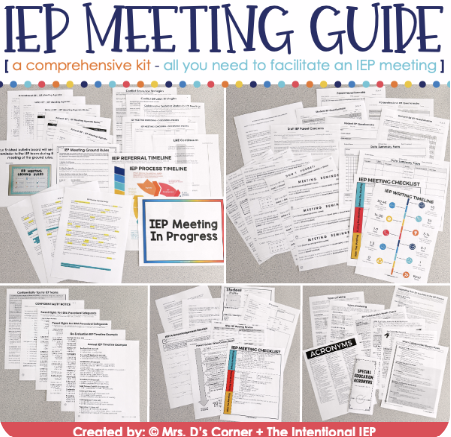
In essence, the collective observations of these professionals provide a well-rounded picture of the student, which is crucial for tailoring an effective IEP. Collaboration and open communication among all educators involved in a child’s education is paramount to ensuring consistency and continuity in the implementation of the IEP strategies, ultimately contributing to the child’s success.
Input forms are a great way to collect this information from general ed and specials teachers. Remember that the easier you make it for them to provide you with the information you need, the more likely they are to get it to you quickly.
Preparing to write an IEP involves an in-depth, multifaceted approach to accurately understand and support a student’s unique learning needs. It necessitates diligent data collection on progress towards IEP goals using a variety of assessment tools and gathering valuable input from educators across different disciplines.
The process is collaborative, drawing from the collective insights of general and specials teachers to formulate a well-rounded understanding of the student’s strengths, challenges, and interests. This comprehensive approach to IEP preparation ensures that strategies are effectively tailored to the student’s needs, fostering their academic success and personal growth.
Remember, the ultimate goal is to create an inclusive, supportive, and engaging learning environment for every child through a well-written, data driven IEP.
Writing the IEP is only one part of managing it. The Intentional IEP System helps special education teachers manage the work before, during, and after the meeting—from baselines and goals to timelines, implementation, progress monitoring, and everything in between. Instead of piecing together another resource every time something comes up, you’ll have one educator-led system designed to help you know what to do, have what you need, and know what’s next. See how The Intentional IEP System works →