
Writing Individualized Education Program (IEP) goals is a crucial aspect of a special education teacher’s job. These goals serve as roadmaps for students with disabilities, outlining the specific skills they need to develop and the progress they need to make.
As a special education teacher, it’s essential to create IEP goals that are meaningful, measurable, and attainable. In this blog post, we’ll discuss ten important things to remember when writing IEP goals to ensure optimal outcomes for your students.
IEP Goal Writing
Focus On the Student’s Individual Needs and Strengths
When designing IEP goals, it’s essential to consider each student’s unique needs and strengths. Take into account their current level of performance, interests, and preferences. By tailoring the goals to each student, you can ensure that the objectives are both relevant and achievable.
Utilize the SMART Framework
To write effective IEP goals, follow the SMART framework. Ensure that the goals are Specific, Measurable, Attainable, Relevant, and Time-bound. This framework provides clarity and structure, making it easier to monitor progress and evaluate success.
Use Clear and Concise Language
When describing the desired outcome in IEP goals, use clear and concise language that leaves no room for ambiguity. Avoid vague terms and instead be specific about what the student should be able to do or achieve.

Align Goals with the Student’s Current Level of Performance
Effective IEP goals build upon a student’s existing skills. Consider their current performance level in different areas, such as academics, social skills, and behavior. By aligning the goals with their present abilities, you can create challenging yet attainable targets and set students up to succeed.


Break Down Complex Skills Into Smaller Steps
For students with disabilities, complex skills can often be overwhelming. Break down larger skills into smaller, more manageable steps to aid in their progress. This allows for a gradual progression toward mastery and helps students stay motivated.
Address ALL Areas of Need
An effective IEP should address all areas of a student’s need, including academic, social, and behavioral domains. Consider the specific challenges the student faces and create goals that target those areas directly. Don’t leave out areas of need.
Involve Parents or Guardians in the Goal-setting Process
Parents play a vital role in their child’s education. Involve them in goal-setting by seeking their input and collaborating on developing IEP goals. Their perspective can provide valuable insights into the student’s strengths and challenges.
Collaborate with Other Professionals and Support Staff
Special education is a collaborative field that requires input from various professionals and support staff. Collaborate with colleagues such as speech therapists, occupational therapists, psychologists, and behavior specialists to ensure that all aspects of a student’s needs are addressed effectively.
They are on the IEP team for a reason; use their knowledge to help improve your student’s goals.
Remember – your general education counterpart is the content and grade level expert. You will struggle to do your job without him or her; just as they cannot support students with IEPs in their classroom without you. This isn’t just about implementation – you should be working together throughout the entire IEP process.
Support with IEP Goal Writing
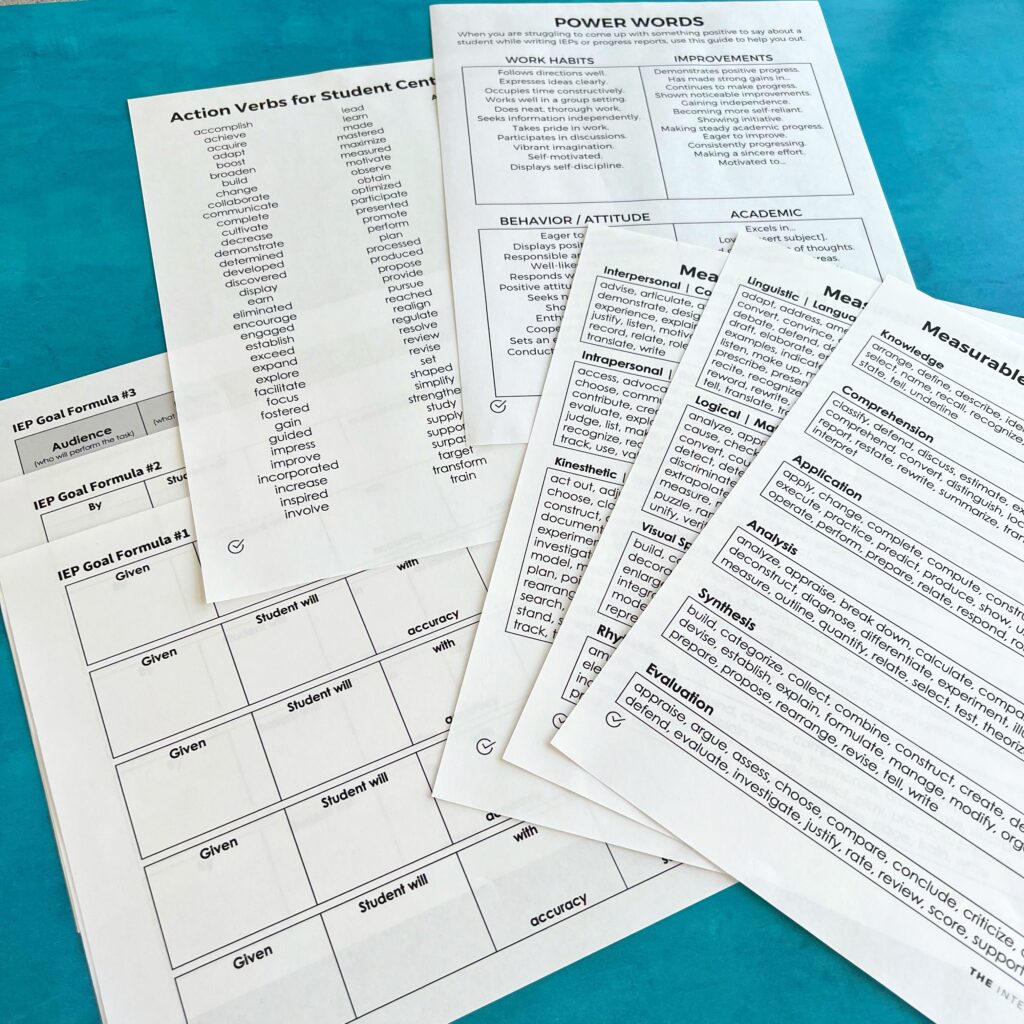
The Intentional IEP Membership offers a wide range of trainings directly related to determining and writing IEP Goals. Members gain access to valuable resources such as trainings on:
- Writing IEP Goals
- Aligning IEP Goals to Standards
- Choosing IEP Goals
- Lesson Planning with IEP Goals
- and more!
Learn more about the TII System here.
Writing effective IEP goals is a crucial responsibility for special education teachers. You can create meaningful goals that promote student growth and success by following the ten tips above. Remember to focus on individual needs, utilize the SMART framework, involve parents or guardians, regularly monitor progress, and collaborate with other professionals.
With well-designed IEP goals, you can provide your students with the support they need to thrive academically and socially.
If every upcoming IEP sends you searching for the next goal, form, data sheet, training, or reminder, the problem probably isn’t that you need more resources. You need a better way to manage the process. The Intentional IEP System connects the tools, guidance, and workflows special educators need across the IEP lifecycle so you can stop managing IEPs one meeting at a time and start working more intentionally. See what intentional IEP management looks like →