
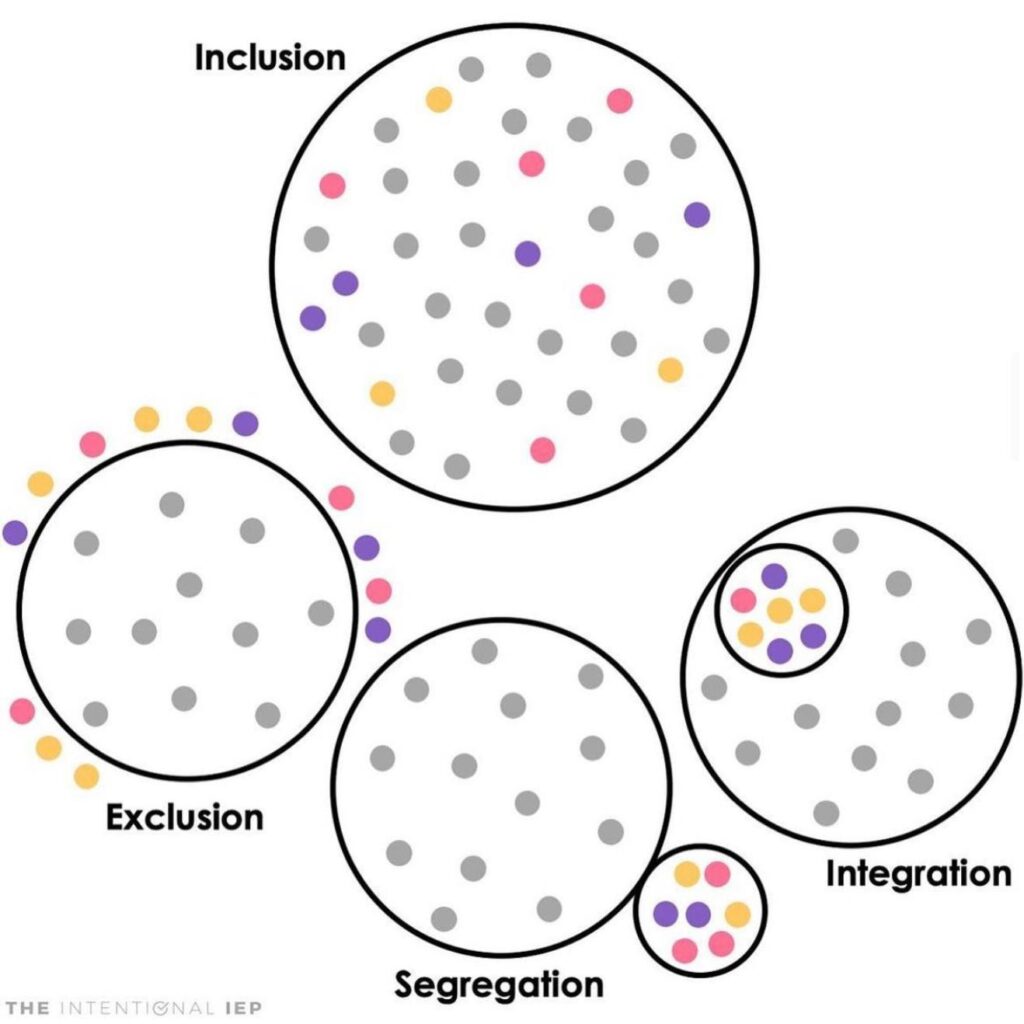
The terms mainstreaming and inclusion in education are often used interchangeably, but they are not the same – each having its own distinct meaning and approach to integrating students with disabilities into general education settings.
What is Mainstreaming?
Mainstreaming refers to placing students with disabilities in general education classrooms only when they can meet traditional academic expectations with minimal support. The student must “keep up” with their neurotypical peers and adapt to the general education curriculum. The primary focus is on academic performance and readiness to participate in a general education setting.
This might look like a student with a mild learning disability joining a general education math class, but receives specialized instruction in reading in a pull-out resource room.
What is Inclusion?
Inclusion is a philosophy that promotes educating all students with disabilities in general education classrooms with appropriate supports and accommodations. Moreso than just a philosophy, inclusion is district- and school-wide. Inclusion happens when classrooms adapt to the needs of neurodivergent learners, rather than expecting students to conform to traditional norms.
A lot of co-teaching models are based in inclusion, so this might look like a student with autism staying in the general education classroom for the entire day with supports from the special education teacher and a paraprofessional, along with modifications to the curriculum.
Most schools strive for inclusive education, recognizing that students benefit academically and socially from being with their peers, regardless of ability. However, many fall short of truly being inclusive at the school and district levels.
Why Is It Important to Know the Difference Between Mainstreaming and Inclusion?
Many educators unknowingly practice mainstreaming instead of true inclusion because they don’t fully understand the difference. Understanding the difference between mainstreaming and inclusion is essential for educators, administrators, and families because it directly impacts how students with disabilities experience school and learning.
True inclusion shifts the mindset from “fitting students into the system” to “adapting the system to fit all students.”
When educators understand the difference, they can provide appropriate supports rather than just placing a student in a general education classroom without proper resources. Plus, inclusion ensures that all students can participate meaningfully, promoting equity in education, whereas mainstreaming excludes students if they are only allowed in general education when they can “keep up” without adaptations.
How to Actively Promote More Inclusive Practices in Schools
Creating an inclusive school environment and inclusive classroom environment requires intentional strategies that support all students. Here are a few ways teachers can help promote inclusion:
- Advocate for inclusion in school policies by asking for professional development on inclusion for all teachers, and – maybe most importantly – ensuring all students with disabilities are included in school-wide events, assemblies, and extracurriculars.
- Set the tone that every student is valued, respected, and included, regardless of ability by using positive language and celebrate diversity in ability, culture, and learning styles.
- Design lessons that provide multiple ways for students to access content, engage, and express learning during a lesson. You can also offer audio, visual, hands-on, and interactive options for students to meet all different learning styles within your classroom.
- Teach all students about disability awareness and inclusion, and foster natural friendships and social integration between all students.
- Ensure your classroom environment supports all students by arranging desks and classroom spaces to accommodate wheelchairs, sensory needs, and movement breaks.

Inclusion is not just a practice—it’s a mindset and a commitment. By implementing these strategies, educators can ensure that every student feels valued, supported, and empowered in their learning journey and as a human being.
If every upcoming IEP sends you searching for the next goal, form, data sheet, training, or reminder, the problem probably isn’t that you need more resources. You need a better way to manage the process. The Intentional IEP System connects the tools, guidance, and workflows special educators need across the IEP lifecycle so you can stop managing IEPs one meeting at a time and start working more intentionally. See what intentional IEP management looks like →