
If you’re a special education teacher or part of an IEP team, understanding Child Find is one of the most powerful tools you have to support students. Under the Individuals with Disabilities Education Act (IDEA), Child Find is a legal requirement that ensures all children with disabilities are identified, located, and evaluated to determine if they need special education services.
Knowing your role in Child Find can help you catch struggling students early, before they fall further behind. Together, let’s break down what Child Find means, what the law says, how teachers are involved, and when it might be time to take action. Whether you’re new to special education or a veteran advocate, this is your new go-to guide.
What Is Child Find?
Child Find is a legal obligation under IDEA (34 CFR §300.111) that requires public schools to locate, identify, and evaluate children with disabilities – regardless of the severity of their disability. This includes children who are:
- Enrolled in public schools or in private schools,
- Homeschooled,
- Experiencing homelessness,
- In foster care,
- Migrant, or
- Under the age of three (in early intervention systems)
The goal is to ensure that no child with a disability goes without the services and supports they need to access a Free Appropriate Public Education (FAPE).
You can find Child Find in the IDEA regulations under 34 CFR §300.111. This section states that schools must have policies in place to locate, identify, and evaluate children with disabilities.

It’s not just for students already receiving services. Child Find includes students who haven’t yet been identified, but are showing possible signs of disability and may need additional supports.
What Does Child Find Mean for Teachers?
As a teacher, you are on the front lines of Child Find. You are often the first to notice when a student is struggling, not making progress, or showing signs of a possible disability.

Under Child Find, you are legally responsible for acting on those concerns. That doesn’t mean you diagnose a disability, but it does mean you have a duty to document what you’re seeing and refer the student for evaluation when needed.
Even if a parent hasn’t asked for help, if you see signs of a disability affecting learning or behavior, you can and should speak up. Child Find means the school cannot delay evaluations or ignore red flags.
If you have a student in your class, or your own child, that you suspect may need special education services:
- Document concerns early and clearly, including academic progress, behaviors, and any and all supports that have already been tried.
- Communicate with the family in kind and supportive, yet informative way. This process may be new to them and you will be their guide.
- Understand timelines and rights under IDEA.
- Collaborate with general education teachers and related service providers.
- Know that Child Find applies to all students, not just those already in special education.
Being proactive in Child Find is one of the best ways to change a student’s entire educational journey.
When Might a Teacher or Parent Use Child Find?
Here are a few real-world situations where Child Find comes into play:
- A third-grade teacher notices a student is still not reading basic words, despite extra support in class. The student may need to be evaluated for a learning disability.
- A kindergartner is not talking much, avoids peers, and has strong sensory reactions. The teacher suspects a developmental delay or autism and shares concerns with the family.
- A student transferred mid-year from another state with no IEP but major academic and behavior concerns. The teacher brings the data to the school team to start the Child Find process.
- A parent writes a letter requesting an evaluation because their child is struggling with reading at home. This counts as a Child Find referral and must be followed up with an evaluation timeline.
The key takeaway? Anyone, teacher, parent, or even school staff, can initiate the Child Find process if there is a concern that the child may have a disability.
What Happens After a Child Find Referral?
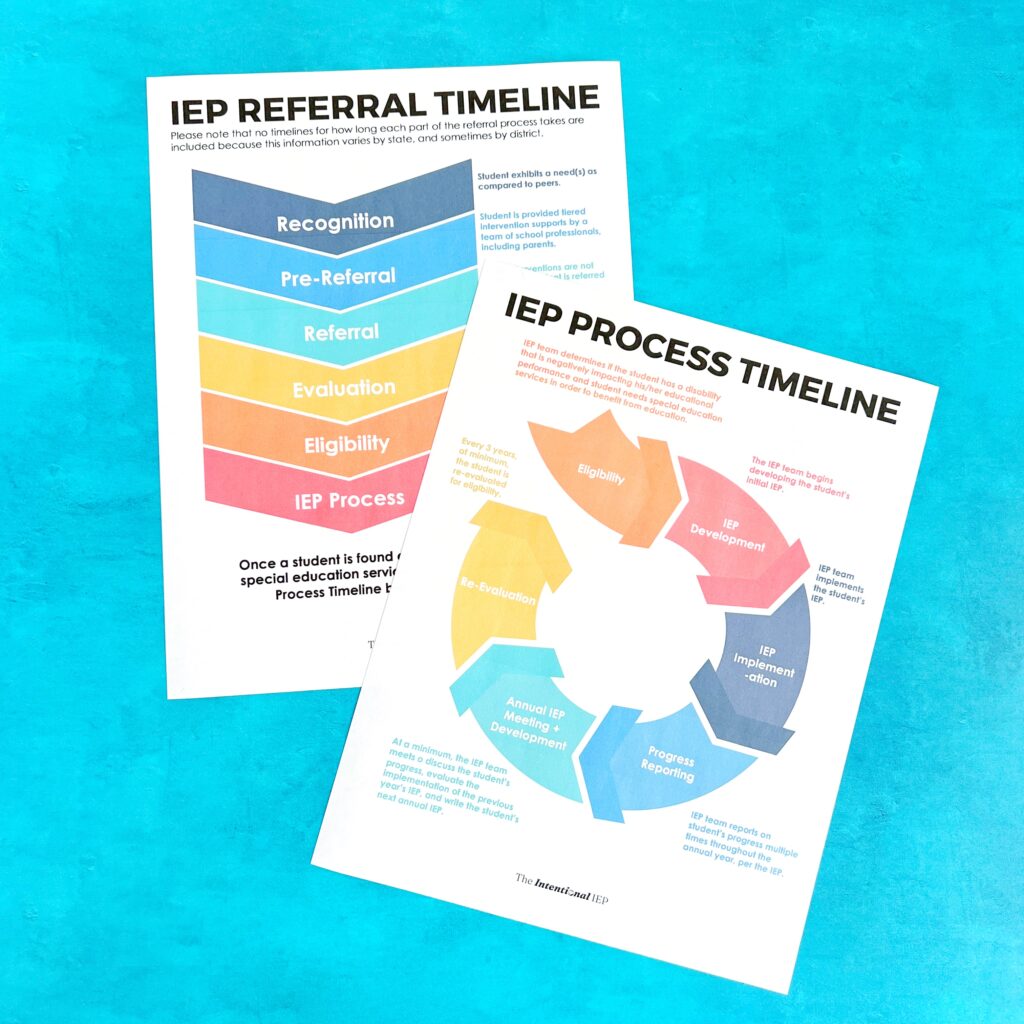
Once a concern is raised, the school has a legal obligation to respond promptly. Typically, this means the team will:
- Hold a meeting to review data and decide if an evaluation is needed.
- If yes, obtain parent consent to start formal evaluations.
- Complete evaluations within the required timeline (usually 60 calendar days, but check with your state guidelines).
- Use the data to determine eligibility for special education services.
During this time, schools should keep clear records and communicate closely with the family. If a child is found eligible, the IEP process begins.
Child Find isn’t just a legal obligation. It’s a commitment to equity, inclusion, and opportunity for all students. As a teacher and IEP team member, you play a vital role in ensuring that students aren’t overlooked or left behind.
When you understand your role in Child Find, you become a stronger advocate for students who may need support, but haven’t been identified yet. Trust your instincts, document your concerns, and speak up when needed.
And always remember – early identification leads to better outcomes. If we want to give every student access to meaningful learning, we have to start by finding them.
An IEP doesn’t begin when you open the document—and the work doesn’t end when everyone leaves the meeting. There’s baseline data to gather, decisions to make, goals to connect, timelines to manage, services to implement, progress to monitor, and adjustments to make along the way. The Intentional IEP System gives special educators one connected way to manage all of it. Build a better system for the IEP work you’re already doing →