
When it comes to supporting students with disabilities, every member of the IEP team needs to be on the same page. That’s where shared access to the Individualized Education Program (IEP) becomes essential. But what does shared access actually mean and how do we make sure it follows FERPA laws and protects student confidentiality?
Together, let’s explore the meaning of shared access in special education, why it’s important for IEP implementation, who should have access, and how to balance collaboration with student privacy. Whether you’re a new special education teacher, a general education partner, or a related service provider, understanding IEP shared access rights is key to delivering effective, compliant support in the classroom.
What Does Shared Access Mean for IEPs?
Understanding IEP Access for Better Student Support
When it comes to supporting students with disabilities, collaboration is everything. One of the most important parts of that collaboration is shared access to the IEP. Shared access means that all team members who work with a student have the information they need from the IEP to do their jobs well. This includes special education teachers, general education teachers, related service providers, and paraprofessionals.
Shared access to the IEP is more than just giving someone a copy. It means creating a shared understanding of what’s in the plan and how to put it into action.
What Is Shared Access in an IEP?
Shared access means everyone on the team knows the goals, services, accommodations and modifications, and supports written into the IEP. Each team member should have access to the parts of the plan that apply to their role.
For example, a general education teacher may need to know about classroom accommodations, while a speech-language pathologist may focus on communication goals and service minutes. This access is not about sharing private details for the sake of sharing. It’s about helping everyone work together to meet the child’s needs.
Why Is Shared Access So Important?
Students are more likely to make progress when everyone on the IEP team is working from the same page. If only one person understands the plan, then only one person can support the student. When everyone has shared access, students get more consistent support across settings. It also builds trust among team members and helps catch gaps before they become problems. When teachers, therapists, and support staff know what’s expected, they can provide the right supports at the right time.
What Shared Access Looks Like in Practice
In most districts, shared access means that IEPs are available digitally through an online system. But just because a team member can open the document doesn’t mean they know what to do with it. That’s why real shared access also means taking time to explain the plan. This might happen during a team meeting, a one-on-one conversation, or with a short written summary. It’s also helpful to check in during the year to make sure everyone is still clear on the plan and how it’s going.

Who Should Have Shared Access to the IEP?
The IEP team includes more than just the people who attend the meeting. Anyone who is responsible for implementing a part of the plan should have access. This can include classroom teachers, therapists, aides, transportation staff, and cafeteria staff if they’re helping meet a goal or support a need. It’s also a good idea to let substitutes or long-term coverage staff know what parts of the IEP apply to their day-to-day work.
Keeping Student Information Private
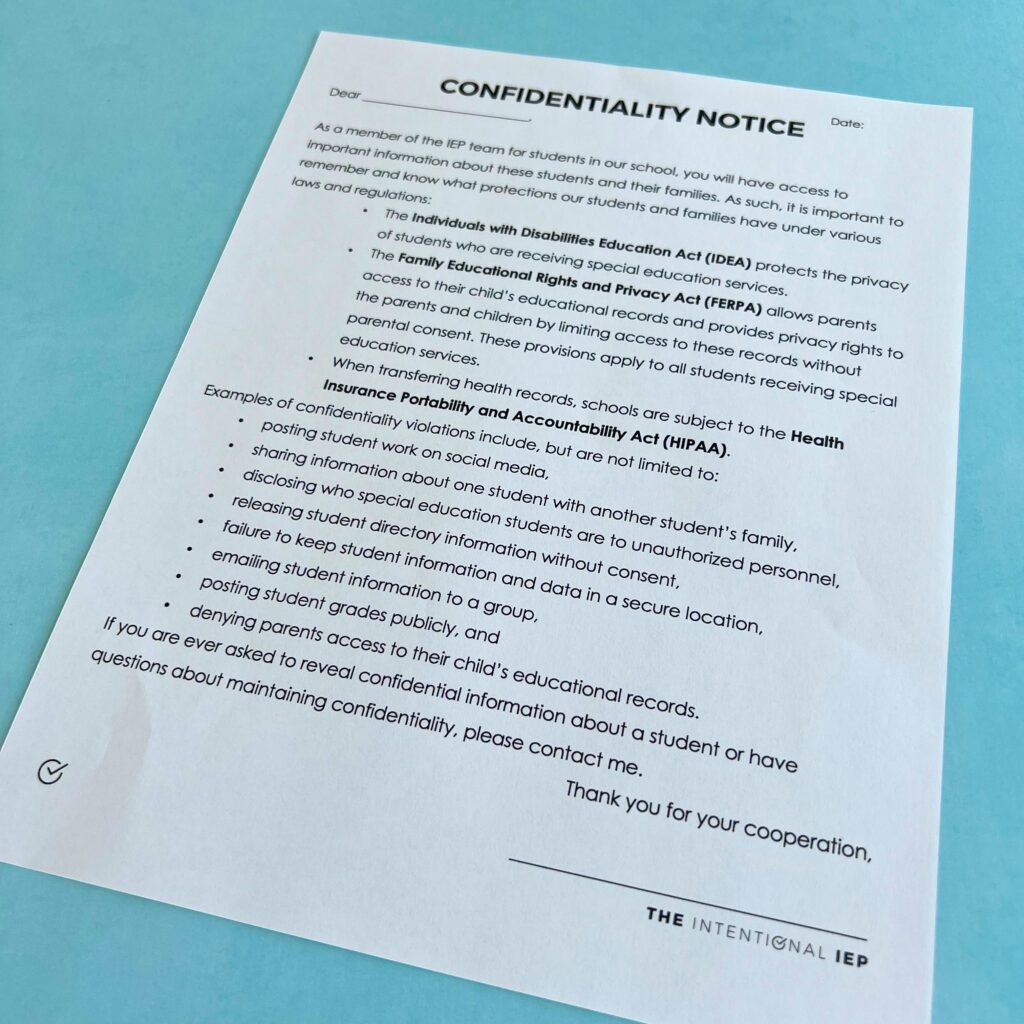
Even though shared access is important, student privacy still matters. Everyone who sees the IEP should be trained in confidentiality and only share details with others who need to know. It’s never okay to talk about a student’s IEP in public spaces or with staff who aren’t on the team. Protecting the student’s dignity and privacy should always come first.
Shared Access, FERPA, and Confidentiality
Even though shared access is necessary for IEP implementation, it must follow the rules of the Family Educational Rights and Privacy Act (FERPA). FERPA is a federal law that protects the privacy of student education records, including IEPs. Under FERPA, only school staff with a legitimate educational interest can access a student’s IEP. This means they must be directly involved in the student’s instruction or services. Just being curious or working in the building isn’t enough.
Staff must also keep the information confidential. That means not discussing a student’s IEP in the hallway, breakroom, or with staff who aren’t part of the team. Sharing access should be thoughtful, limited to those who need it to support the student, and always handled with care. Keeping student information private is not only a legal requirement, it builds trust with families and protects student dignity.
Sometimes, we need to remind team members about student privacy in a way that’s kind but clear. Here’s a sample script you can use if someone is discussing a student’s IEP in an inappropriate setting or with someone who shouldn’t have access:
“Hey, I just want to give you a quick reminder that we have to be really careful about where and with whom we talk about student IEPs. FERPA says we can only share that kind of info with people who are directly involved in the student’s support. Let’s make sure we’re protecting their privacy. If you ever have questions about who can see what, I’m happy to talk through it or loop in admin.”
This script helps redirect the conversation without blaming or embarrassing anyone. It keeps the focus on doing what’s right for students and following the law.
IEPs are living documents and they only work when they’re understood and used by the full IEP team. Providing shared access to IEPs ensures that every educator and service provider knows how to support the student across all settings. But with that access comes the responsibility to protect student privacy under FERPA.
When we share the right information with the right people, and do it the right way, students benefit from consistent, aligned support that helps them thrive. Stay informed, stay collaborative, and remember: shared access is about shared responsibility.
An IEP doesn’t begin when you open the document—and the work doesn’t end when everyone leaves the meeting. There’s baseline data to gather, decisions to make, goals to connect, timelines to manage, services to implement, progress to monitor, and adjustments to make along the way. The Intentional IEP System gives special educators one connected way to manage all of it. Build a better system for the IEP work you’re already doing →