
You notice a student struggling to cut, write, navigate the building, communicate what they want clearly, regulate during a classroom routine, or maybe access instruction, which leaves you to think, “Maybe they need OT.” Or maybe it’s speech, PT, counseling. But what happens next?
Because truthfully, all children could benefit from therapy or additional support. When determining Individualized Education Program (IEP) related services, the IEP team has to determine whether the service is required for the student to benefit from special education.
First, What Are Related Services?
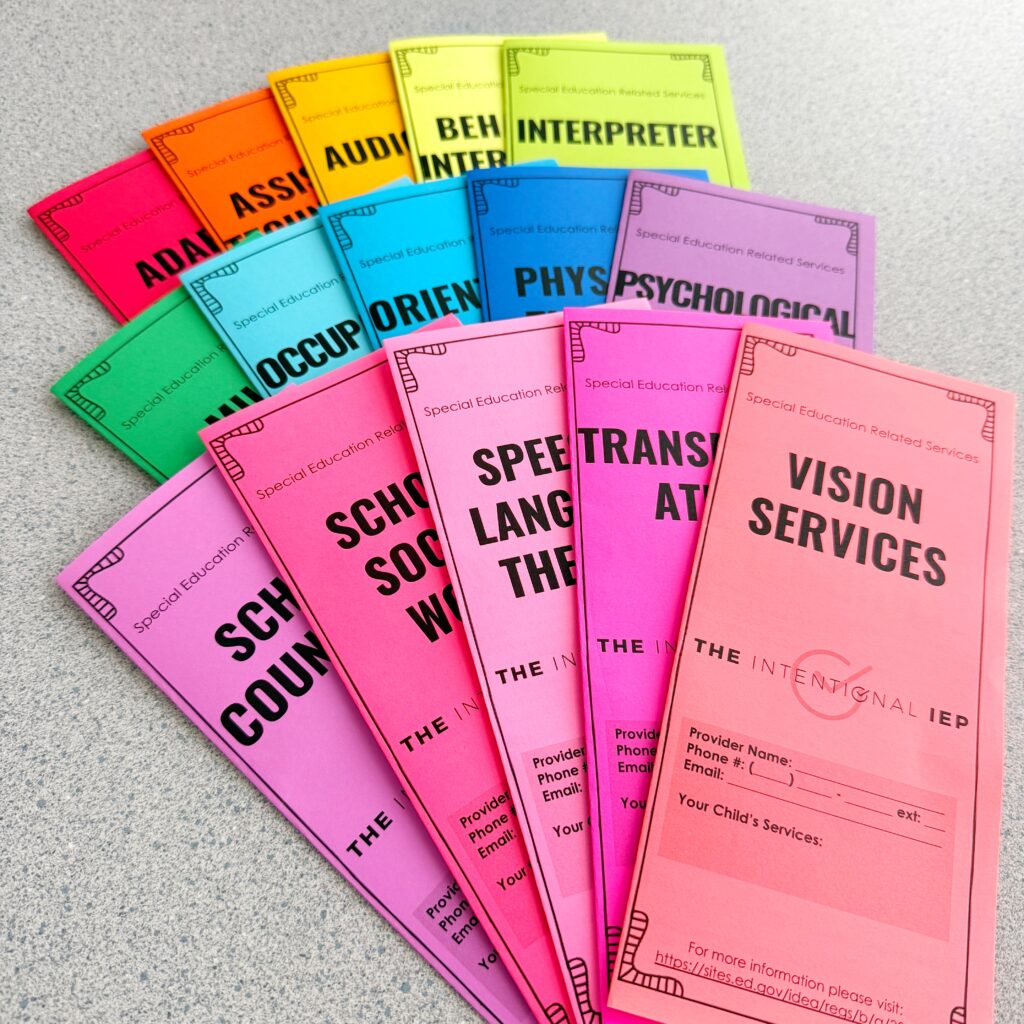
Under IDEA, related services are developmental, corrective, and supportive services a child may need in order to benefit from special education. These related services can include speech language pathology, occupational therapy (OT), physical therapy (PT), counseling, psychological services, transportation, school nursing, orientation and mobility (O&M), audiology, social work, and others.
How does the team decide which ones this particular child needs?
Step 1: Someone on the IEP Team Identifies a Concern
A teacher notices that a student cannot independently manage classroom materials. A parent reports that communication breakdowns are increasing at home. A student struggles to safely navigate stairs. Data shows that behavior is interfering with access to instruction. It all starts with someone noticing a student’s need.
And this is where good documentation (re: data) matters.
Instead of: “Stephanie’s handwriting is bad.”
We want and need information like: “During three independent writing tasks this week, Stephanie produced 1–2 readable words in ten minutes and required adult assistance to complete written responses.”
This is more specific, and this is information we can work with.
Step 2: The IEP Team Determines What Needs to Be Evaluated
IDEA requires schools to assess students in all areas related to the suspected disability and to make the evaluation sufficiently comprehensive to identify the child’s special education and related-service needs, even needs that are not commonly associated with the student’s eligibility category.
Everything we do and write into a child’s IEP needs to circle back to: “What are this student’s educational needs?”
Evaluation may involve formal assessments, observations, work samples, classroom performance, parent information, teacher input, provider observations, or other appropriate measures. IDEA specifically says that no single assessment can be used as the sole criterion for determining eligibility or the student’s educational program.
Step 3: The IEP Team Looks at Educational Impact
This is where school-based services can get confusing.
Imagine an occupational therapist evaluates a second grader and finds fine motor weakness or deficit. That finding matters, but… it doesn’t automatically answer the IEP question or mean the student will benefit from OT services. The IEP team still needs to look at how that need affects the student’s education.
Can the student access classroom tasks? Complete written work? Manipulate instructional materials? Participate independently in routines? Is existing specially designed instruction enough, or is OT support required?
The same exact reasoning and thought process applies to speech, PT, counseling, transportation, nursing, and other related services. Because a need can exist without automatically creating a need for a particular IEP service.
Step 4: The IEP Team Reviews All of the Data
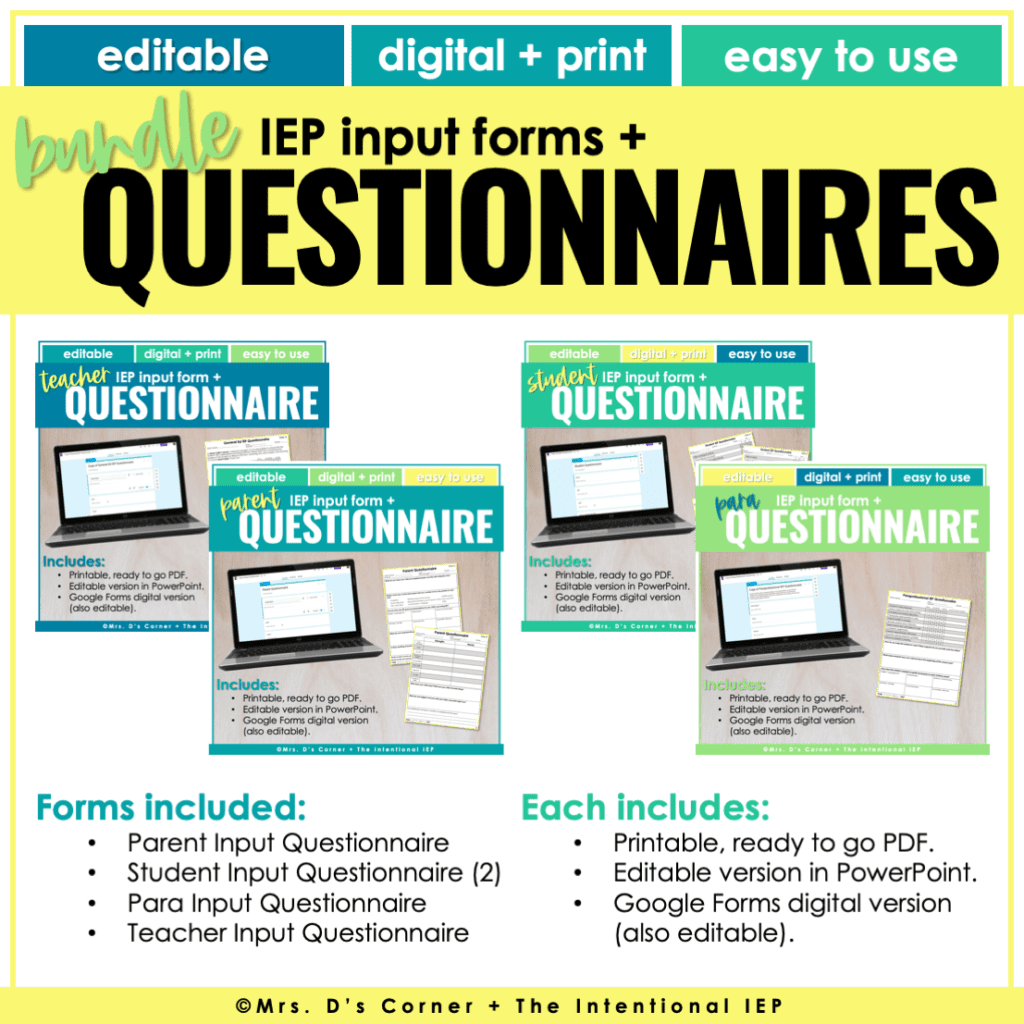
IDEA tells IEP teams to consider information from multiple sources, including parent input, evaluations, classroom assessments, observations, teacher recommendations, and information about the student’s physical, social, cultural, and adaptive functioning.
The provider’s expertise is incredibly important here, too – but it’s important to remember that related service decisions are IEP team decisions based on the individual student. OSEP has specifically reinforced that teams must make individualized determinations based on each child’s unique abilities and needs. Which means, a better team discussion sounds like:
- What need did we identify?
- What does the data tell us?
- How does that need affect school participation or progress?
- What is already being provided?
- Does the student require this related service to benefit from special education?
That last question keeps the conversation centered where it belongs: on the student, not the service.
Does a Child Always Need Another Formal Evaluation to Add a Related Service?
Schools must evaluate students in all areas of suspected disability. But if no additional disability is suspected and the team already has sufficient information to determine that an additional related service is necessary for FAPE, another full evaluation may not always be required. State and district procedures can add requirements, so IEP teams should follow their local evaluation procedures.
For an initial special education evaluation, IDEA requires a full and individual evaluation before the initial provision of special education and related services. Federal regulations generally provide 60 days from parental consent unless the state has established its own timeframe.
Determining IEP related services should never become a checklist of therapies attached to a disability label. Start with the child, as we always should and do. Then assess the need, understand the educational impact, review the data, and determine the support(s).
That’s the difference between reacting to an IEP one service at a time and managing the IEP process intentionally.
If every upcoming IEP sends you searching for the next goal, form, data sheet, training, or reminder, the problem probably isn’t that you need more resources. You need a better way to manage the process. The Intentional IEP System connects the tools, guidance, and workflows special educators need across the IEP lifecycle so you can stop managing IEPs one meeting at a time and start working more intentionally. See what intentional IEP management looks like →