
Fading supports is one of the most important parts of special education, yet it is commonly one of the most overlooked. As special education teachers, we work hard to provide supports, accommodations, prompts, and help that students need to access learning. But what happens next is just as important.
If supports are never faded, students can become dependent on adults, tools, or prompts that were meant to be temporary. Teaching fading strategies helps students build independence, confidence, and real-world skills.
This blog post will explain what fading means, why fading supports is critical for IEP success, and why teams need a fading plan from the very beginning, not after problems show up.
If you write IEPs, implement IEPs, or support students with disabilities, this is a conversation your team needs to be having.
What Does Fading Mean in Special Education?
Fading is the planned process of slowly reducing supports so a student can do a skill more independently over time. Supports can include prompts, adult help, visual aids, accommodations, modifications, or assistive tools. Fading does not mean taking help away all at once. It means stepping back in small, intentional ways while the student builds the skill.
The goal of fading is independence. The support is not the end goal. The student’s ability to perform the skill on their own is. When fading is done well, students rely less on adults and more on their own skills – and this is what we want!

Why Fading Supports Is So Important
Supports are meant to help students access learning, not replace learning.
When supports stay in place too long, students may stop trying on their own. They may wait for prompts, rely on adult cues, or struggle when supports are not available. This can limit growth and confidence.
Fading supports helps students:
- Build independence across settings
- Generalize skills to new people and places
- Prepare for real-world expectations
- Develop confidence and problem-solving skills
Fading also protects the integrity of the IEP. Many IEP goals are written to measure student performance, not adult assistance. If supports are never faded, data may reflect the support, not the student.
Why Fading Is Often Overlooked
Fading is often missed because teams are focused on helping students succeed right now. Teachers want students to be successful. Paraprofessionals want to help. Related service providers want progress. In the moment, it feels easier to keep supports in place rather than risk frustration or failure.
Another reason fading is overlooked is that it is rarely written into the IEP. Goals may say what support is used, but not how or when that support will be reduced. Without a clear plan, fading becomes something we think about later – and later often turns into never.
Why You Need a Fading Plan From the Start
Fading should not be a reaction. Rather it needs to be a part of instruction from day one. Why? Because when a fading plan is built early, everyone knows the goal is independence. Teachers, paraprofessionals, and related service providers are working toward the same outcome.
A fading plan answers simple but important questions:
- What support is being used
- When will we begin reducing it
- How will we know the student is ready
- What data will guide our decisions
When fading is planned, it feels intentional instead of uncomfortable and overwhelming.
How to Teach Fading Strategies Effectively
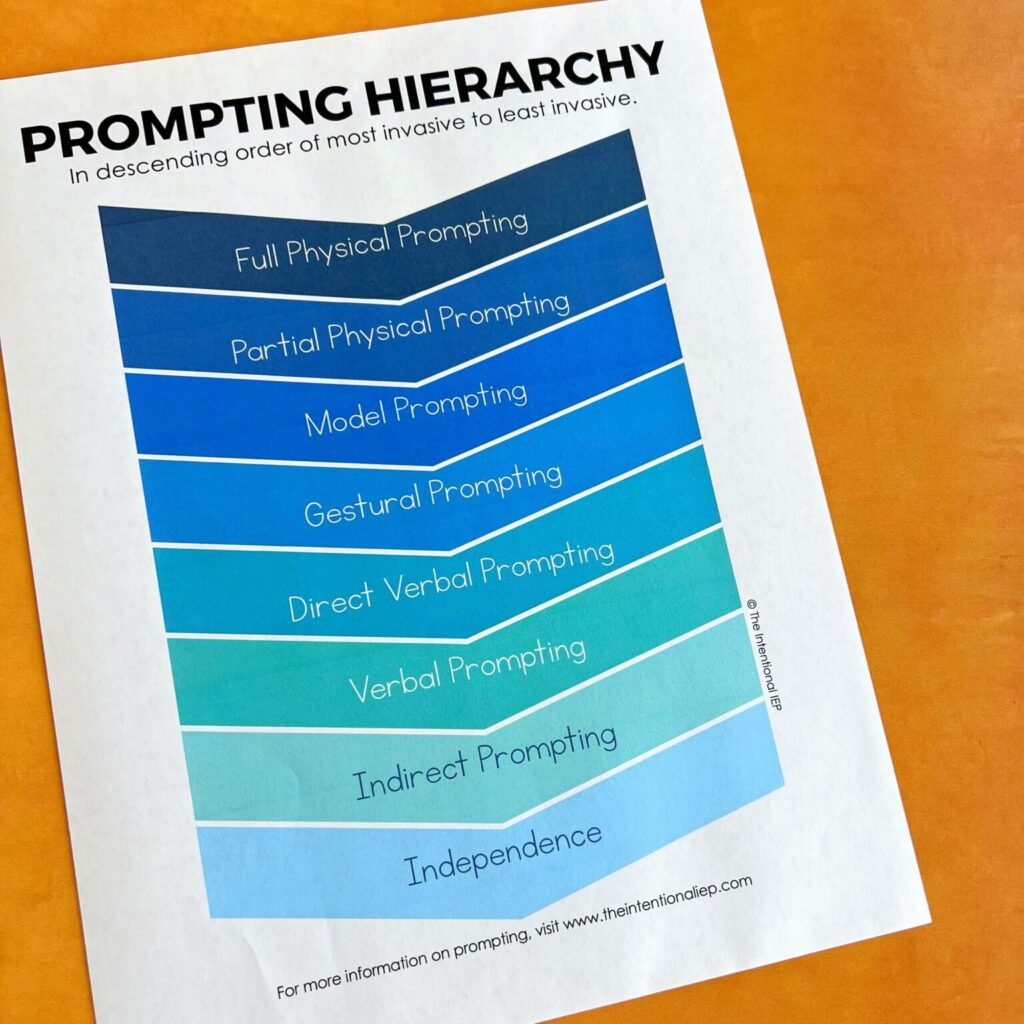
Teaching fading strategies starts with knowing the student and the skill. Look at what the student can already do. Identify the least amount of support needed for success. Start there.
Then, reduce supports slowly and intentionally. This may mean changing the type of prompt, increasing wait time, or stepping back physically while still observing.
Don’t forget to collect data as the student’s supports are faded. Data helps teams know if fading is working or if the student needs more time.
Fading should feel supportive, not sudden. The student should still feel successful while learning to rely on themselves.
Fading Is a Team Responsibility
Fading supports is not just the job of one teacher.
General education teachers, special education teachers, paraprofessionals, and related service providers all play a role. Consistency matters. When one adult fades and another does not, students get mixed messages and it halts generalization. Clear communication and shared expectations make fading more successful and less stressful for everyone involved.
Fading supports is not something to figure out later; it’s a core part of effective teaching and strong IEP implementation. When teams plan for fading from the beginning, students gain independence, confidence, and skills that last beyond the classroom.
Supports should open doors, not become permanent crutches. Teaching fading strategies helps students walk through those doors on their own. If we want students to grow, we have to plan for the moment when we step back.
If every upcoming IEP sends you searching for the next goal, form, data sheet, training, or reminder, the problem probably isn’t that you need more resources. You need a better way to manage the process. The Intentional IEP System connects the tools, guidance, and workflows special educators need across the IEP lifecycle so you can stop managing IEPs one meeting at a time and start working more intentionally. See what intentional IEP management looks like →