
Managing a large caseload in special education is no small feat. With 30 or more students, each having multiple Individualized Education Program (IEP) goals, ensuring that every student makes progress can feel overwhelming. The key is organization, efficiency, and strategic planning. While no system is perfect, there are many ways to structure your workflow to maximize student success while keeping your workload manageable.
Below are some effective strategies to help you track, monitor, and support student progress when juggling a heavy caseload.
1. Use a Spreadsheet or Digital Tracking System
One of the best ways to stay organized is by creating a spreadsheet to monitor each student’s progress. Tools like Google Sheets, Microsoft Excel, or specialized programs such as IXL can help track skill development, goal mastery, and assessment data.

How to Implement:
- Create a document with student names, goals, and progress tracking. Or use our data tracking forms!
- Color-code students based on their progress (e.g., red for needs more support, yellow for making progress, green for mastery).
- If you have a paraprofessional, delegate data entry to them to save time.
- Use Google Forms to collect quick, on-the-go data that automatically updates into your spreadsheet. We have them already made for you here!
This system provides a clear snapshot of student growth while making it easier to complete progress reports.
2. Align Goals with Daily Instruction
To ensure students consistently work toward their goals, integrate them directly into your daily lessons rather than treating progress monitoring as a separate task.
Practical Steps:
- Design lessons that naturally address multiple IEP goals at once.
- Use intervention programs that align with many reading or math goals (e.g., SIPPS for early literacy).
- Whenever possible, write IEP goals that match the school’s existing progress monitoring system to reduce redundancy.
- Use IEP work bins for students
By weaving goals into your instruction, you can maximize teaching time while gathering useful progress data.
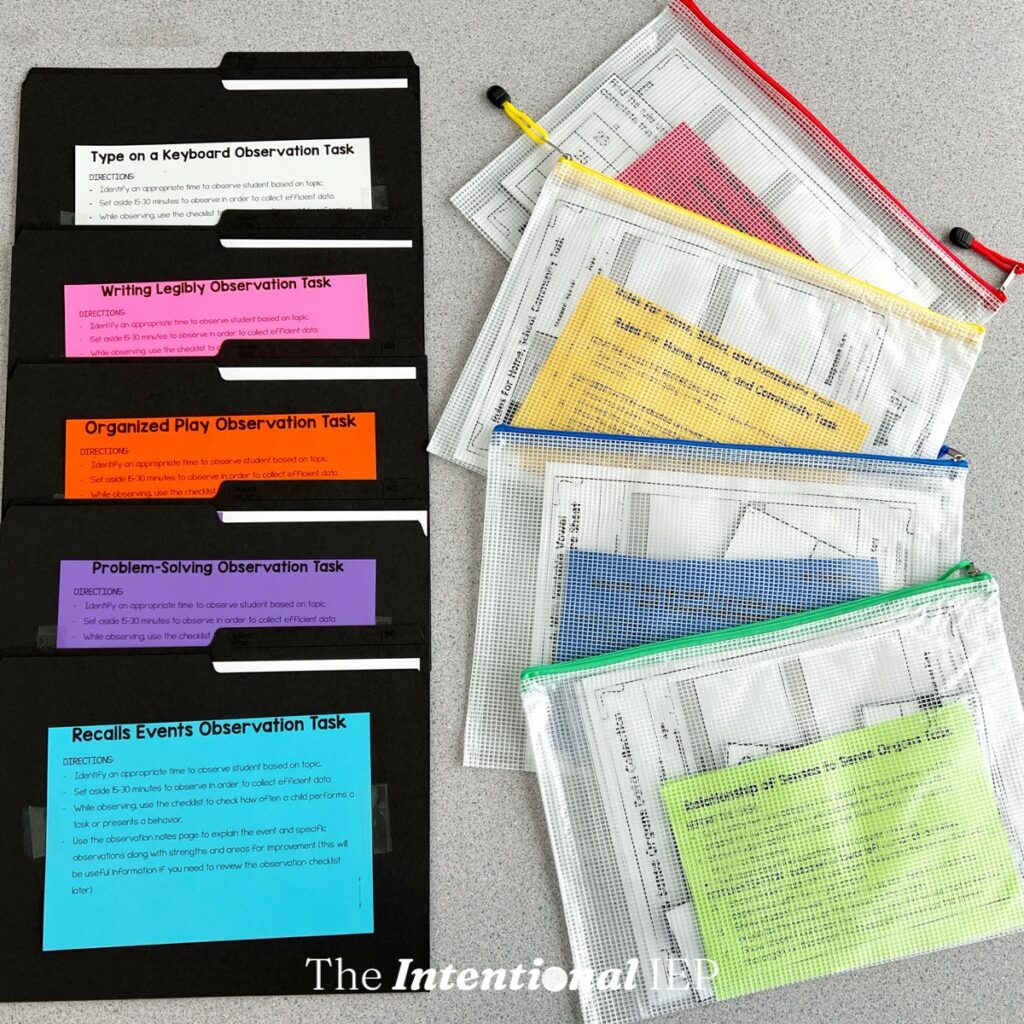
3. Use Student Work Folders or Binders
Keeping student-specific materials organized is essential. A simple system of folders or binders can make goal tracking more manageable.
Organization Ideas:
- Create a physical or digital folder for each student containing their goals, worksheets, and progress monitoring data.
- Use sectioned binders with dividers for different subjects or goal areas.
- Include “must-do” and “may-do” work for students to complete independently during rotations.
This method ensures all data is easily accessible when it’s time to update progress reports.
4. Schedule Progress Monitoring Days
Instead of constantly assessing students, designate specific days for focused progress monitoring. This prevents data collection from becoming overwhelming and ensures consistency.
How to Implement:
- Assign each student a specific day or week for data collection.
- Spread progress monitoring tasks across your schedule so you’re not tracking all students at once.
- Utilize technology like IXL quizzes or Google Forms to automate parts of the assessment process.
With a structured schedule, you can balance teaching and data collection without feeling overloaded.
5. Group Students with Similar Goals
When possible, group students with similar goals together. This allows for more effective instruction and streamlined data collection.
Grouping Strategies:
- If multiple students have reading comprehension goals, they can work on the same passage while answering questions tailored to their levels.
- In math, students working on similar computation skills can practice together with differentiated problems.
- Rotate groups based on skill mastery, ensuring students get targeted support while keeping lesson planning manageable.
Grouping makes it easier to deliver meaningful instruction while tracking multiple students at once.

6. Collaborate with General Education Teachers
You don’t have to manage student progress alone. General education teachers can be valuable allies in supporting IEP goals.
Collaboration Tips:
- Align goals with existing classroom instruction whenever possible.
- Communicate regularly with teachers about how students are progressing in their general education setting.
- Provide teachers with easy-to-use tracking sheets or checklists to gather informal data.
By involving classroom teachers, you ensure students receive consistent support across all environments.
7. Involve Students in Their Own Progress Monitoring
When students understand their own goals and progress, they become more motivated and engaged in their learning.
Ways to Empower Students:
- Use student-friendly goal-tracking sheets where they can color in their progress.
- Set small, achievable milestones and celebrate successes along the way.
- Encourage students to reflect on their progress and set personal learning goals.
This fosters independence and helps students take ownership of their learning journey.
8. Keep Goals Realistic and Focused
While IEPs should be ambitious, they should also be manageable. Writing clear, concise goals helps prevent overwhelming workloads.
Best Practices for Goal Writing:
- Limit the number of goals to 2-4 high-impact areas whenever possible.
- Choose measurable, specific objectives that align with daily instruction.
- If a student masters a goal mid-year, update their IEP with new targets instead of overloading them with excessive goals from the start.
A quality-over-quantity approach ensures goals are meaningful and achievable.
9. Utilize Support Staff and Paras Effectively
If you have paraprofessionals, volunteers, or aides, use them strategically to maximize student support.
Ways to Delegate:
- Have paras assist with data collection by tracking student work and behavior.
- Assign small-group interventions that align with IEP goals.
- Train staff on how to effectively use tools like progress monitoring forms and digital tracking systems.
A well-organized team can make managing a large caseload much more feasible.
10. Accept That You Can’t Do Everything at Once
Even with the best systems in place, managing a large caseload will always come with challenges. Not every student will progress at the same rate, and some days will be harder than others.
Things to Remember
- Focus on what matters most—providing high-quality instruction and meaningful support.
- Don’t stress over perfection. Instead, prioritize consistency and efficiency.
- Advocate for reasonable caseload sizes and additional support when needed.
At the end of the day, special education is about progress, not perfection. By implementing structured systems and focusing on student-centered strategies, you can ensure every child moves forward—even with a full caseload.

An IEP doesn’t begin when you open the document—and the work doesn’t end when everyone leaves the meeting. There’s baseline data to gather, decisions to make, goals to connect, timelines to manage, services to implement, progress to monitor, and adjustments to make along the way. The Intentional IEP System gives special educators one connected way to manage all of it. Build a better system for the IEP work you’re already doing →