
Managing IEPs and 504 plans is not an easy task. They are complicated, legal documents that require a lot of attention and care. If the documents are not followed there can be legal ramifications for the school.
Here are some tips and advice for working with IEPs and 504 plans in the school to ensure that the laws are being followed and students are receiving the services that they need and are entitled to get.
Working with IEPs and 504 Plans
Record IEP Meetings
Recording IEP meetings can sometimes be a point of contention for schools and families. The benefits to recording the meeting are that there is documentation of exactly what was said and how, as well as documentation about what the school agreed to and what it did not agree to.
It can be very difficult to distinguish between IEP meetings after the fact if you have a large caseload of students, so a recording of the meeting gives you another reference point for later documentation.
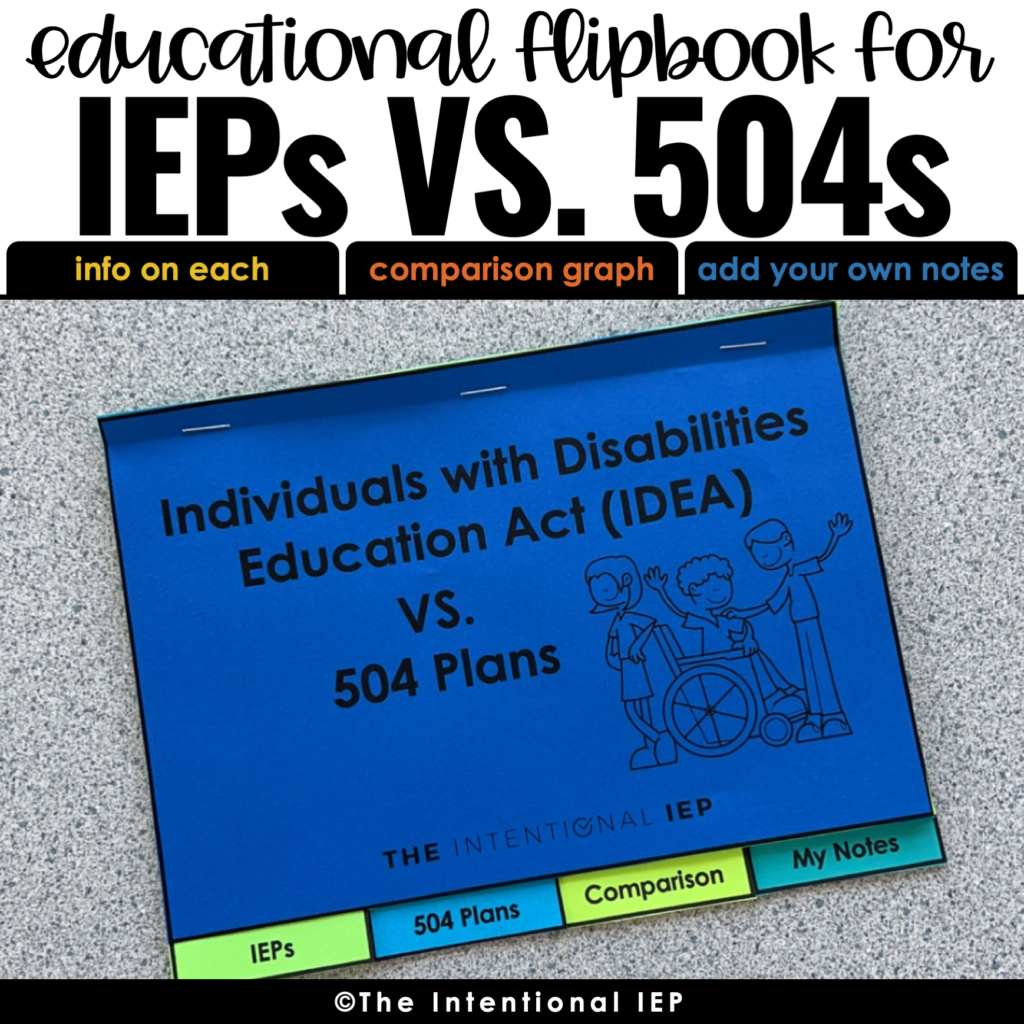
Understand the Difference Between IEPs and 504 Plans
One of the biggest challenges in managing IEPs and 504s is that many people do not understand the difference between the two. One of the best pieces of advice is to know and be able to explain the difference between IEPs and 504 plans. Not only is it important to know for your own reference but when you have to explain it to parents and staff members, it is critical to have a clear understanding of them.
In short, an IEP is an Individualized Education Program and it lays out a specific, individualized plan for one student for one year of special education services. A 504 is a plan (named after Section 504 of the Rehabilitation Act) for how the school will provide support services for a student with a pervasive or temporary disability/health condition.
You can read more about the differences and similarities between the two here.
Communicate, Communicate, Communicate
Communication is key when it comes to managing IEPs and 504 plans. Not only is communication important between staff members, but it is also important to keep an open line of communication with families of students with plans.
The more that you communicate with others, the easier it is to implement IEPs and 504 plans, collect data, schedule meetings, and provide intervention when things are not going to plan. There is no such thing as over-communication when it comes to managing IEPs and 504 plans so be sure to consistently talk with everyone on the team.
Document Verbal Conversations
It may seem obvious but one of the best pieces of advice when dealing with IEPs and 504 plans is to document verbal discussions. Oftentimes, conversations had by phone or in person can miss the documentation piece of the process. Make it a priority to jot down all conversations so that everyone is on the same page. This is especially helpful when handling difficult cases.
Work Closely with General Ed Teachers
IEPs and 504 plans don’t work in isolation – they rely on collaboration. General education teachers are essential partners in ensuring that accommodations and modifications are delivered with fidelity, but they often don’t have the special education training to implement these plans confidently. That’s why consistent collaboration is key:

That’s why consistent collaboration is key:
- Instead of overwhelming them with the full document, provide a one-page summary highlighting the most critical pieces of the plan, like accommodations, testing supports, and behavior strategies. You’ll have heard this called an IEP Snapshot or IEP at a Glance.
- Follow up with regular check-ins, especially at the beginning of the school year or when challenges arise.
- When possible, co-planning or even co-teaching can help bridge the gap between what’s on the paper and what’s happening in the classroom.
Building these relationships early creates a team mindset and helps ensure consistency across settings.
Organize the Paperwork Before It Piles Up
Let’s be honest: paperwork management can be one of the most overwhelming parts of special education. Without a system, it’s far too easy for forms, notes, and student data to end up in a towering pile – or worse, missing entirely. Having an organization strategy for both digital and physical documents is critical.
Many teachers find it helpful to create a caseload management binder or digital folder for each student, with at-a-glance summaries of services, accommodations, and goals. Others prefer spreadsheets or apps to track service minutes, log accommodations, and monitor data trends. No matter the format, the goal is to keep everything organized and accessible so that paperwork doesn’t become a barrier to implementation.
- PRO TIP: Even dedicating a weekly or monthly “IEP Power Hour” to paperwork, documentation, and data analysis can help you stay caught up without it becoming overwhelming.


Build Systems That Work For You
Managing IEPs and 504 plans doesn’t have to feel chaotic. The key is building systems that work for you. Whether it’s a spreadsheet, a binder, or a digital dashboard, your organizational structure should support you, not stress you out.
When your systems are consistent and your processes are predictable, you spend less time trying to keep your head above water and more time focusing on what matters most: helping students succeed. These legal documents are more than compliance – they’re opportunities. And with the right tools, training, and mindset, you can implement them with both fidelity and purpose.
By understanding that IEPs and 504s need to be managed in a way that makes sense, it is easy to fit the pieces of advice above into your everyday handling of cases. As always, remember that while your student may be one of many for you, they are the world for a family who cares about them very much.
Your district’s IEP platform gives you a place to document the IEP. The Intentional IEP System was built for the work happening around it. Created by a veteran special educator, the system brings together practical workflows, professional guidance, screeners, goals, data tools, planning support, and more to help you confidently manage the IEP process without handing your professional judgment over to software. Explore the educator-led IEP management system →