
As special education teachers, one of our primary goals is to ensure that our students with individualized education programs (IEPs) make progress toward their goals. Traditionally, data collection has been the responsibility of the teacher alone. However, involving students in the process not only empowers them to take ownership of their learning but also enhances their engagement and self-awareness.
In this blog post, we will explore various ways students can actively participate in data collection for their IEP goals. We will discuss using technology tools like Google Forms, graphs, and data chats as effective strategies to facilitate student involvement.
The Importance of Student Involvement in Data Collection
Before delving into specific strategies and tools, it’s crucial to understand why involving students in data collection is so beneficial. By actively participating in this process, students:
- Enhance goal-setting skills: By collecting data, students learn to set realistic goals and evaluate their progress toward achieving them. This skill is valuable not only during their time in school but also in their future endeavors.
- Develop a sense of ownership: When students are involved in collecting data on their progress, they feel a greater sense of ownership over their learning journey. This sense of ownership can lead to increased motivation and engagement.
- Gain self-awareness: Data collection allows students to monitor their progress and understand their strengths and areas that need improvement. It encourages self-reflection and helps students develop a growth mindset.
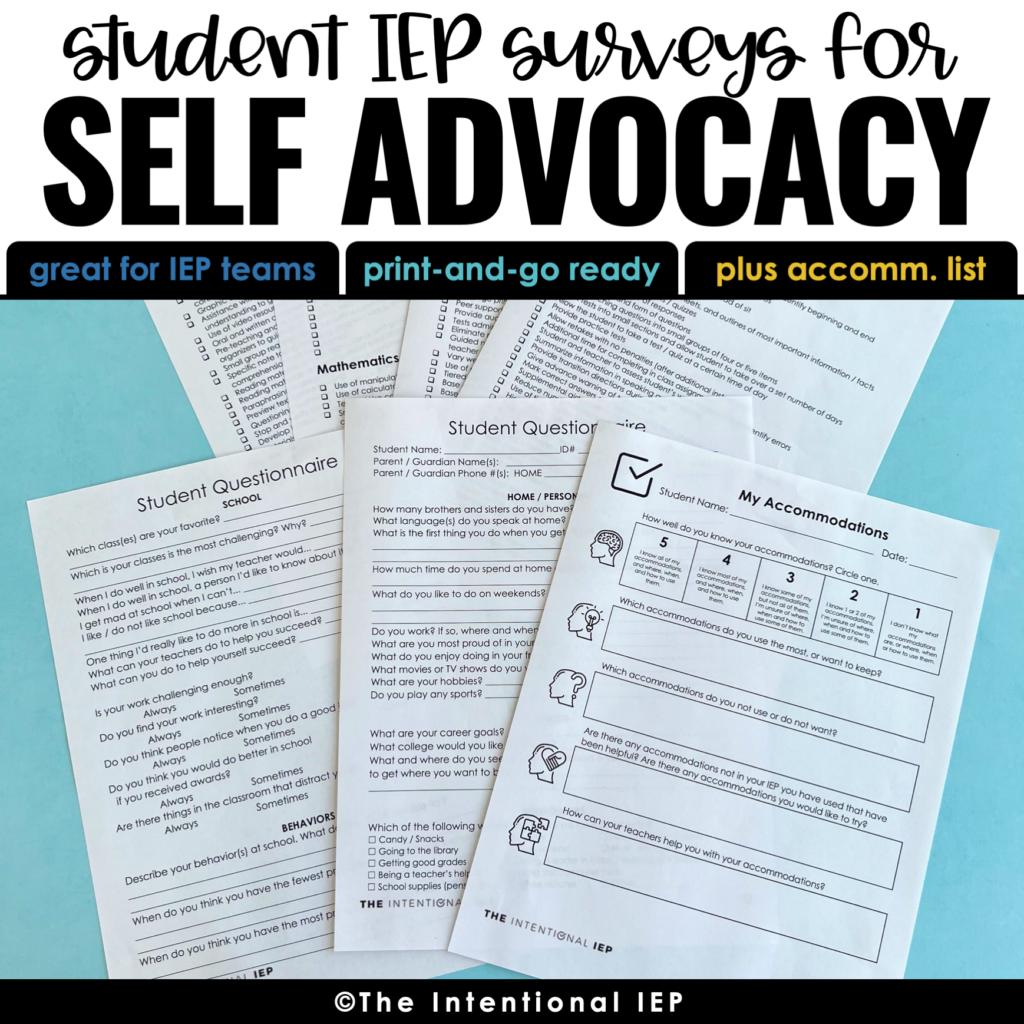
Helping students learn to self-advocate is so important! These Student Self-Advocacy books and activities make it easy!
Using Google Forms for Data Collection
Google Forms is a versatile tool that can be used effectively for data collection. Here are a few ways special education teachers can involve students in data collection using Google Forms:
- Self-reporting surveys: Design surveys using Google Forms that allow students to self-report their progress toward specific IEP goals. For example, if a student’s goal is to improve reading fluency, the form could include questions about the number of words read correctly per minute during independent reading.
- Goal-setting surveys: Create surveys at the beginning of the quarter or semester where students set goals related to their IEP objectives. These surveys can help students articulate what they hope to achieve and serve as a reference point during subsequent data chats.
- Reflection surveys: Use Google Forms to gather qualitative feedback from students about their learning experiences. Ask questions such as “What strategies have helped you make progress towards your goals?” or “Is there anything you would like to change about how we work on your IEP goals?”

Visualizing Progress with Graphs
Graphs are an excellent visual tool for students to track and visualize their progress over time.
Here’s how you can incorporate graphs into the data collection process:
- Goal attainment graphs: Set specific benchmarks or milestones for each IEP goal and create graphs that show students’ progress towards these targets. This visualization can motivate students by highlighting the steps they need to take to achieve their goals.
- Individual progress graphs: Create individualized graphs for each student, visually representing their progress towards their IEP goals. Update these graphs regularly and share them with students during data chats. This visual representation facilitates comprehension and helps students see patterns in their progress.
Data Chats – Collaborative Reflection and Goal Setting
Data chats provide an opportunity for special education teachers to engage students in meaningful conversations about their progress toward their IEP goals. Here’s how you can conduct effective data chats:
- Goal review and reflection: Begin data chats by reviewing the specific IEP goals with students. Ask them reflective questions like “How do you think you’re doing on this goal?” or “What strategies have been most helpful in achieving this goal?” Encourage open and honest communication.
- Breaking goals into smaller steps: Collaborate with students to break down long-term goals into smaller, manageable steps. This process helps students develop a clearer understanding of what they need to do to achieve their goals.
- Strategy brainstorming: Engage students in brainstorming sessions to identify strategies that can support their progress toward their goals. Encourage them to share strategies that have worked well for them in the past or explore new approaches they would like to try.
- Action planning: Based on student input, develop action plans together. These plans should outline the specific steps, resources, and support needed to achieve each goal. Ensure that the action plans are realistic and tailored to each student’s abilities and learning style
Student input is important! Use these digital data collection sheets to gather student’s input prior to their IEP Meeting. And, when it’s time for the IEP meeting encourage students to be a part of the process with a Student Led IEP Toolkit.
Celebrating Progress and Adjusting Goals
Recognizing and celebrating progress is essential for maintaining student motivation and engagement. Additionally, adjusting goals as needed ensures that they remain challenging yet attainable. Here’s how you can incorporate these elements into your data collection process:
- Milestone celebrations: Set specific milestones aligned with IEP goals and celebrate when students achieve them. This celebration can include small rewards, recognition, or even a certificate of accomplishment.
- Goal adjustment discussions: Regularly assess whether the current IEP goals are appropriate based on student progress and growth. Engage in goal adjustment discussions with students, considering their input and feedback. This ensures that goals remain relevant and meaningful throughout the IEP period.
- Recognizing non-academic achievements: Remember to acknowledge non-academic achievements as well. Special education encompasses various aspects of student development, so celebrate achievements related to social skills, self-regulation, or personal growth.
By involving students in data collection for their IEP goals, we empower them to take an active role in their own learning journey. Through technology tools like Google Forms and visual aids like graphs, we can make the data collection process more accessible and engaging for our special education students.
Fostering collaborative data chats where students reflect on their progress, set specific goals, and plan actionable steps creates a culture of ownership and growth mindset. Let’s embrace these strategies and work hand-in-hand with our students to achieve success in their individualized education programs.
An IEP doesn’t begin when you open the document—and the work doesn’t end when everyone leaves the meeting. There’s baseline data to gather, decisions to make, goals to connect, timelines to manage, services to implement, progress to monitor, and adjustments to make along the way. The Intentional IEP System gives special educators one connected way to manage all of it. Build a better system for the IEP work you’re already doing →