
For families navigating special education services, it can sometimes feel like you’re juggling an alphabet soup of acronyms, jargon, and IEP meetings. Between parent-teacher conferences, IEP meetings, data check-ins, and progress reports, it’s understandable to feel a little overwhelmed—and a lot confused.
One of the most common questions families and even educators have is: What’s the difference between a parent-teacher conference and an IEP meeting? While both involve collaboration and communication between families and school staff, they serve very different purposes and follow different structures.
Let’s break down the key differences so you can feel more confident, prepared, and empowered to participate fully in both.
What Is a Parent-Teacher Conference?
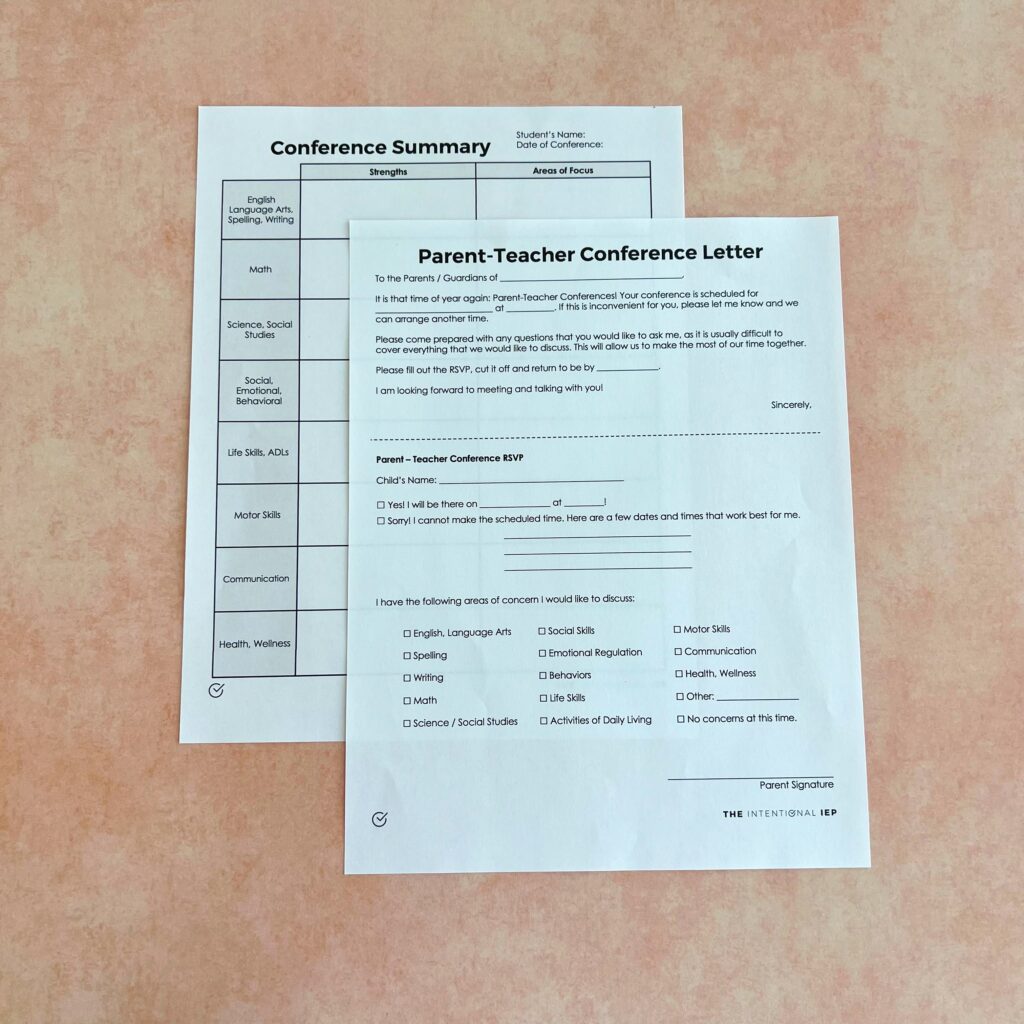
A parent-teacher conference is a short, scheduled meeting between a student’s general education teacher and their parent or caregiver. These meetings typically happen once or twice a year, often in the fall and spring, and are open to all families regardless of whether their child receives special education services.
Purpose of a Parent-Teacher Conference
The main goal of a parent-teacher conference is to discuss a student’s overall progress in the classroom. This includes:
- Academic performance
- Behavior and participation
- Work habits and organization
- Social development
- Any areas of concern or growth
These conversations are usually informal and provide parents with a snapshot of how their child is doing in the general education setting.
Who Attends a Parent-Teacher Conference?
In most cases, the participants are limited to the classroom teacher and the student’s guardian. Occasionally, other educators or support staff may be invited if relevant (for example: a reading specialist), but these are not formal IEP meetings.
Legal Requirements and Documentation
Parent-teacher conferences are not governed by federal law and do not require formal documentation. Notes may be taken, but there’s no mandated follow-up or official record like there is with an IEP meeting.
What Is an IEP Meeting?
An IEP meeting (short for Individualized Education Program meeting) is a formal, legally mandated meeting held for students who qualify for special education services under the Individuals with Disabilities Education Act (IDEA). IEP meetings have to happen at least once a year and focus on creating, reviewing, or updating the student’s IEP.
Purpose of an IEP Meeting
An IEP meeting goes far beyond a general update. It’s designed to:
- Review evaluation results
- Determine eligibility for special education services
- Develop or revise IEP goals and services
- Discuss accommodations, modifications, and placement
- Monitor progress toward previous IEP goals
- Ensure the student receives a Free Appropriate Public Education (FAPE)
Every detail discussed in an IEP meeting is centered around identifying and supporting the student’s individual learning needs.
Who Attends an IEP Meeting?
An IEP meeting includes a full team of individuals who are involved in the student’s education. The required participants include:
- Parent(s) or guardian(s)
- At least one general education teacher
- At least one special education teacher or service provider
- A school district representative (often an administrator or special education coordinator)
- An individual who can interpret evaluation results (such as a school psychologist)
- The student (when appropriate, especially by middle or high school)
- Any other individuals invited by the family or school who have knowledge of the student
This team approach ensures that everyone involved in supporting the child has a voice in the planning process.
Legal Requirements and Documentation
Unlike parent-teacher conferences, IEP meetings are legally required under federal law. There are strict rules about:
- Who must attend
- How often meetings must occur
- How parents are notified
- What must be documented and shared
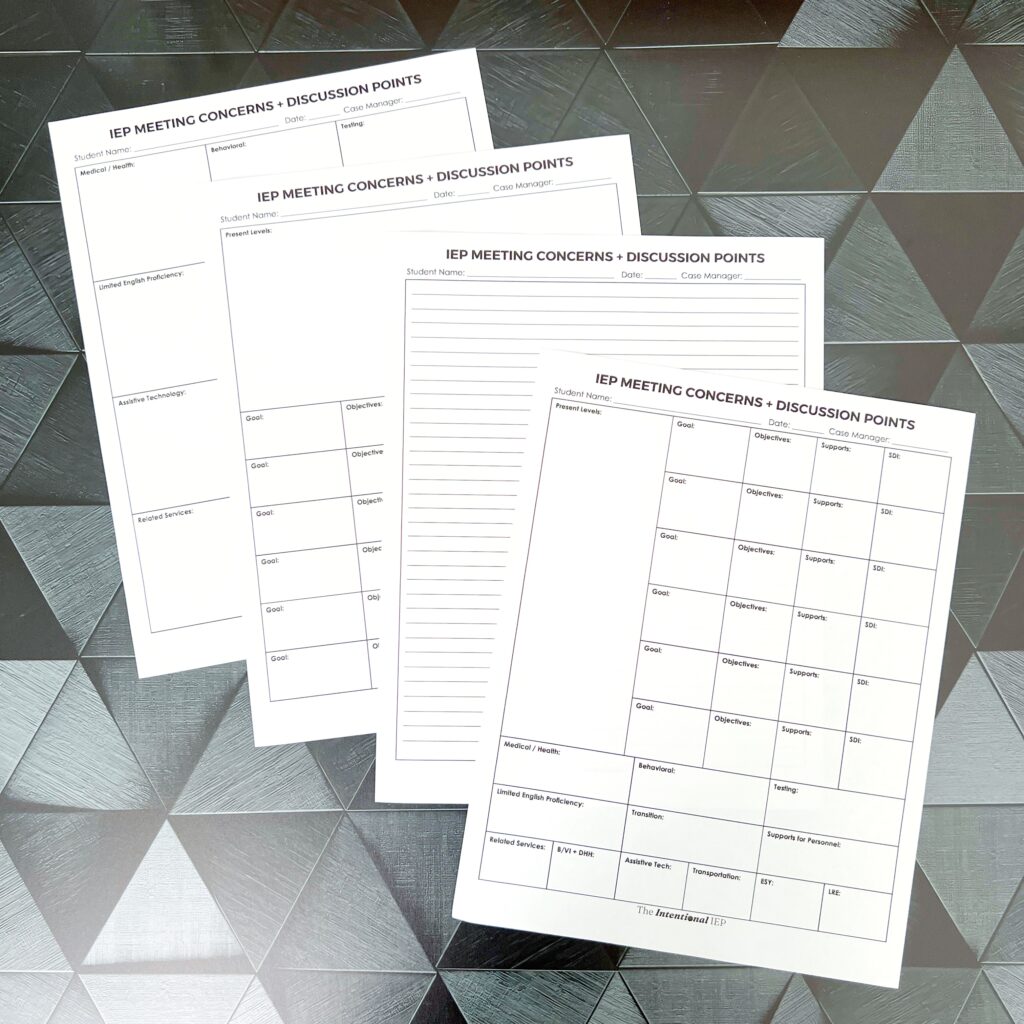
After each IEP meeting, a written IEP document must be developed or revised and provided to the parent(s). This document is legally binding and must be followed by all educators and service providers.
Key Differences at a Glance
The biggest difference between a parent-teacher conference and an IEP meeting is the purpose. A parent-teacher conference is an informal check-in to discuss general academic and behavioral progress, while an IEP meeting is a formal, legally mandated discussion focused on a student’s individualized education plan.
Another key distinction is who attends. Parent-teacher conferences typically include just the parent or caregiver and the classroom teacher. In contrast, IEP meetings include a full team: parents, special and general education teachers, a district representative, service providers, and sometimes the student themselves.
Timing and frequency also differ. Parent-teacher conferences usually occur once or twice a year and are not required. IEP meetings must happen at least once annually by law—and more often if requested by the parent or team.
Documentation requirements are also quite different. Parent-teacher conferences may involve informal notes, while IEP meetings result in a detailed, legally binding document that outlines services, goals, accommodations, and placement decisions.
Finally, the legal weight of the two meetings sets them apart. Parent-teacher conferences are not governed by federal law, whereas IEP meetings are a required component of the Individuals with Disabilities Education Act (IDEA) and come with specific procedural safeguards and responsibilities.
Why Both Meetings Matter
Both types of meetings serve important purposes and help foster communication between families and educators.
- Parent-teacher conferences help keep families informed about classroom dynamics, grades, and general progress.
- IEP meetings ensure that students with disabilities receive the individualized instruction and services they need to succeed.
For families of students with IEPs, attending both meetings can provide a more complete picture of how their child is doing both in the general education environment and in specialized instruction.
How to Prepare for Each Meeting
Preparing for a Parent-Teacher Conference
- Review recent report cards or progress reports
- Come with questions about academics, behavior, or classroom support
- Be ready to listen and collaborate
Preparing for an IEP Meeting
- Review the current IEP before the meeting
- Make notes on what’s working and what’s not
- Bring data, observations, or outside reports if available
- Know your rights and feel confident advocating for your child
While they may sound similar on the surface, parent-teacher conferences and IEP meetings play very different roles in a child’s education journey. Understanding the purpose and expectations of each helps families participate more effectively and ensures that every student’s needs are met.
Whether you’re heading into your first conference or your tenth IEP meeting, preparation and perspective make all the difference. When parents and educators work together with clarity and respect, students thrive.

An IEP doesn’t begin when you open the document—and the work doesn’t end when everyone leaves the meeting. There’s baseline data to gather, decisions to make, goals to connect, timelines to manage, services to implement, progress to monitor, and adjustments to make along the way. The Intentional IEP System gives special educators one connected way to manage all of it. Build a better system for the IEP work you’re already doing →