
If you’ve ever handed a parent the procedural safeguards packet and watched their eyes glaze over, you’re not doing anything wrong… and neither are they. The federal IDEA law is dense, and the language is legal. And yet, parent rights sit at the heart of ethical, effective special education practice.
When educators truly understand parent rights under IDEA, and can explain them clearly, IEP meetings become more collaborative, trust grows, and conflicts are far less likely to escalate.
Why Parent Rights (Procedural Safeguards) Matter
Procedural safeguards exist for a reason. They ensure that families are:
- Informed about decisions affecting their child
- Included as equal members of the IEP team
- Protected when disagreements arise
For schools, safeguards are about compliance. For families, they’re about trust. And when educators explain rights proactively, not just when there’s conflict, we shift the tone from defensive to collaborative.
The Core IDEA Parent Rights, Simplified
Below are the rights that come up most often in real classrooms and IEP meetings, explained the way parents actually understand them.
1. The Right to Participate
Parents must be invited to, and meaningfully included in, all IEP and eligibility meetings.
In plain language:
“You have a seat at the table for every decision about your child.”
This means scheduling meetings at mutually agreed-upon times, considering parent input, and documenting their concerns, even when the team doesn’t fully agree.
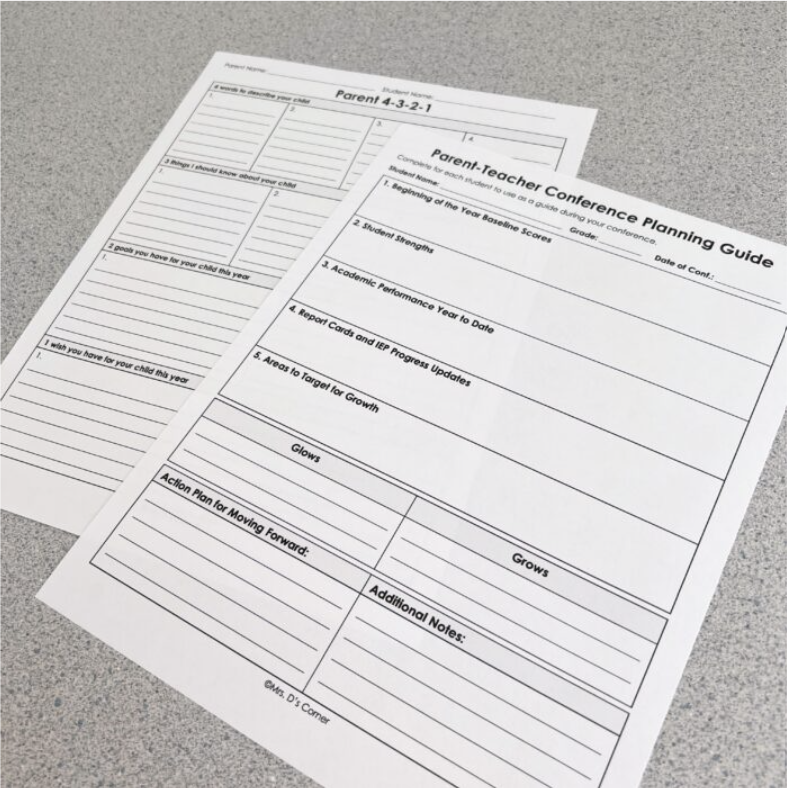
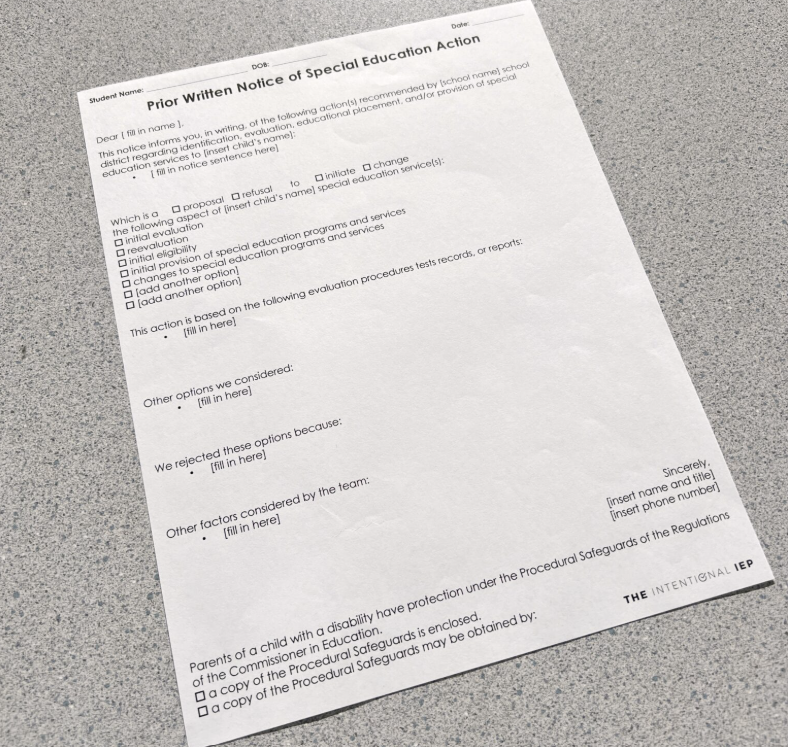
2. The Right to Prior Written Notice (PWN)
Schools must provide written notice before making changes to:
- Identification
- Evaluation
- Placement
- Services
Parents should never be surprised by a change.
In parent-friendly terms:
“We’ll explain in writing what we’re proposing, why, and what options were considered.”
You can grab a FREE, EDITABLE Prior Written Notice in the Member Resources that come with your Intentional IEP membership!
3. The Right to Consent
Written parental consent is required before:
- Initial evaluations
- Initial provision of services
Consent is not a formality. It’s a safeguard.
What families need to hear:
“Nothing moves forward without your approval.”
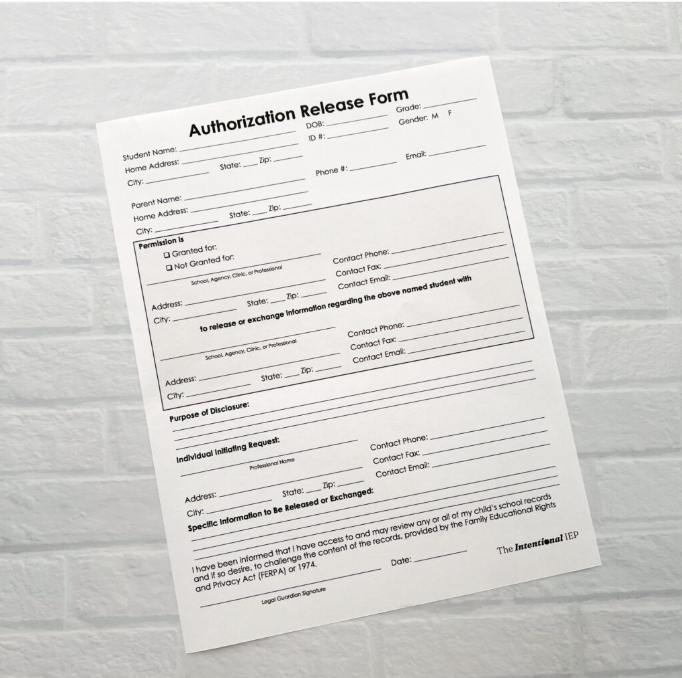
4. The Right to Access Educational Records
Parents can review all educational records related to their child.
This includes evaluations, progress data, behavior records, and service logs.
Plain-language explanation:
“You can see your child’s full file at any time.”
Transparency here prevents misunderstandings later.
5. The Right to an Independent Educational Evaluation (IEE)
If parents disagree with a school evaluation, they may request an Independent Educational Evaluation, sometimes at public expense.
What educators can say:
“You can ask for another evaluation from someone outside the school if you disagree with ours.”
This right often feels intimidating, but it doesn’t have to be adversarial.
6. The Right to Dispute Resolution
When teams can’t agree, IDEA provides formal options:
- Mediation
- State complaints
- Due process hearings
Families should know these options exist before emotions run high.
Educator script:
“If we disagree, there are structured steps to help resolve it.”
7. The Right to Stay-Put
During disputes, a student’s current placement and services generally remain in place until resolution.
In simple terms:
“Your child’s program won’t change while we work this out.”
This provides stability for students and reassurance for families.
Explaining Procedural Safeguards Without Overwhelming Families
The safeguards document is legally required, but how we present it matters. Helpful scripts include:
- “This packet explains your rights in detail. It’s a lot of legal language; I’m happy to highlight the most important parts for today’s meeting.”
- “What questions do you have about your rights as we get started?”
To further parent connection and active collaboration, you can grab this free Special Education Acronym Brochure so parents, as equal stakeholders, don’t get lost if some alphabet soup gets mixed into the conversation.
Real-World Scenarios Educators Face
Disagreement about services:
A parent disagrees with reducing speech minutes. The team provides data, issues PWN, and explains mediation and IEE options.
Surprise placement change:
A staff member suggests a new placement without notifying the parent. Correction: an IEP meeting and PWN must come first.
Evaluation request:
A parent requests ADHD testing. The school promptly provides consent forms and explains timelines.
Each situation becomes smoother when rights are clearly explained upfront.

Tips for Building Trust Around Parent Rights
- Explain rights early, not just during conflict
- Use plain language instead of legal jargon
- Check for understanding, not just compliance
- Document parent input faithfully
- Follow timelines carefully
Trust is built through consistency.
When Procedural Safeguards Must Be Provided
Safeguards must be given:
- At initial referral
- At least once per school year
- Upon parent request
- With the first complaint in a school year
- When discipline changes placement
Missing these moments creates avoidable risk.
Try This at Your Next IEP Meeting
Take two minutes at the start of the meeting to:
- Summarize key parent rights
- Ask which rights feel most important to the family
- Document their questions or concerns
That small step can change the entire tone of the meeting.
Knowing parent rights under IDEA isn’t just about compliance. It’s about honoring families as partners and creating IEP teams built on clarity, trust, and shared purpose. That’s intentional practice.
An IEP doesn’t begin when you open the document—and the work doesn’t end when everyone leaves the meeting. There’s baseline data to gather, decisions to make, goals to connect, timelines to manage, services to implement, progress to monitor, and adjustments to make along the way. The Intentional IEP System gives special educators one connected way to manage all of it. Build a better system for the IEP work you’re already doing →