
Developing meaningful IEP goals starts by understanding what your student needs and what he is working towards. They should be SMART goals that the student can achieve within the IEP’s time period, and should be directly aligned with the child’s Present Levels of Academic and Functional Performance.
If you are struggling to create and write meaningful IEP goals for your students, this guide will help.


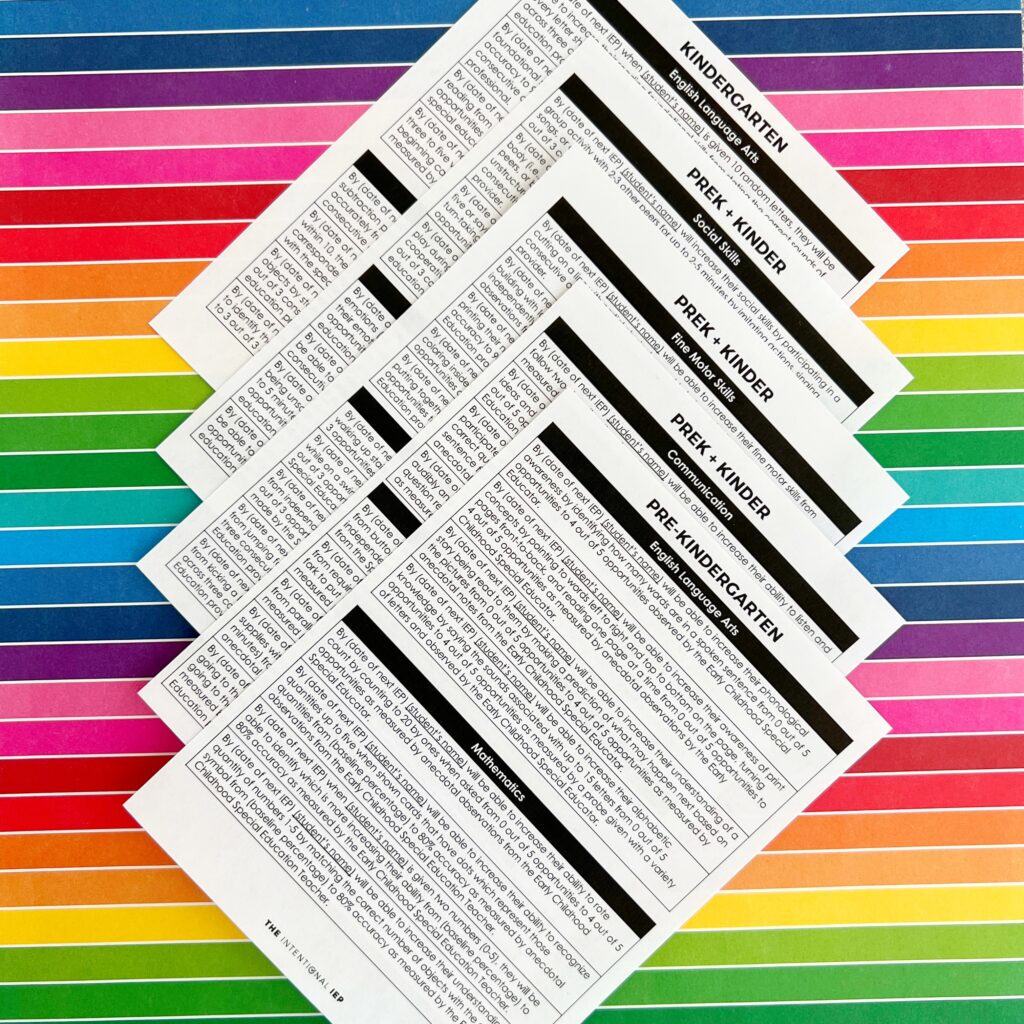
Understanding Where Your Student Is At Academically
Before tackling IEP goals, you must understand where your student is academically. The present levels of performance should include information about how the student did on last year’s goals. Did he struggle to meet the goals? Or were they not challenging enough? This should be based on educational and functional evaluations that took place over the course of the year.
The statement should also include how the student’s disability is impacting his progress, involvement, and performance in the general ed setting.
These evaluations and statements should be based on what you, other teachers, and other support staff have observed and recorded. There should be tangible written proof of this progress or of the student’s lack of progress.
After gathering the data and writing about the student’s present levels of performance, it’s important to have an idea of what you believe the child can accomplish within a school year, as well as what he can ultimately accomplish overall before sitting down to write the IEP goals.
For a Present Levels template check out ours here.
Meaningful IEP Goals are SMART
Meaningful IEP goals are SMART in nature. That means that they are:
- Specific
- Measurable
- Actionable/Use Action Words
- Realistic
- Time-Measured
For students with IEPs, SMART goals make sense because they tell the student and the teachers exactly what the student is working toward accomplishing, how that accomplishment will be measured, and when progress toward the goal will be evaluated.
Without SMART goals, there is no accurate way to know what to measure and when.
What Makes an IEP Goal Meaningful
Good goals encompass a number of traits. They are personalized for the student and take into consideration his present levels of performance.
The goals are also realistic. They are not overly lofty with little chance of being achieved, but they do encourage growth and are ambitious.
Meaningful IEP goals are also able to be implemented in the classroom. This is extremely important because the goals will need to be implemented and evaluated within the classroom setting. If the goals are not able to be implemented in the classroom, it makes it harder for the student and the teacher to make sure they are worked on.
In addition to implementing them in the classroom, good goals are also easily measured at specific timeframes during the school year.
They work with the ultimate long-term goals that the student has and move them in the direction of those goals.
Good goals also do not specify the teaching modality as that may change throughout the course of the year depending on how the student responds to certain interventions and approaches.
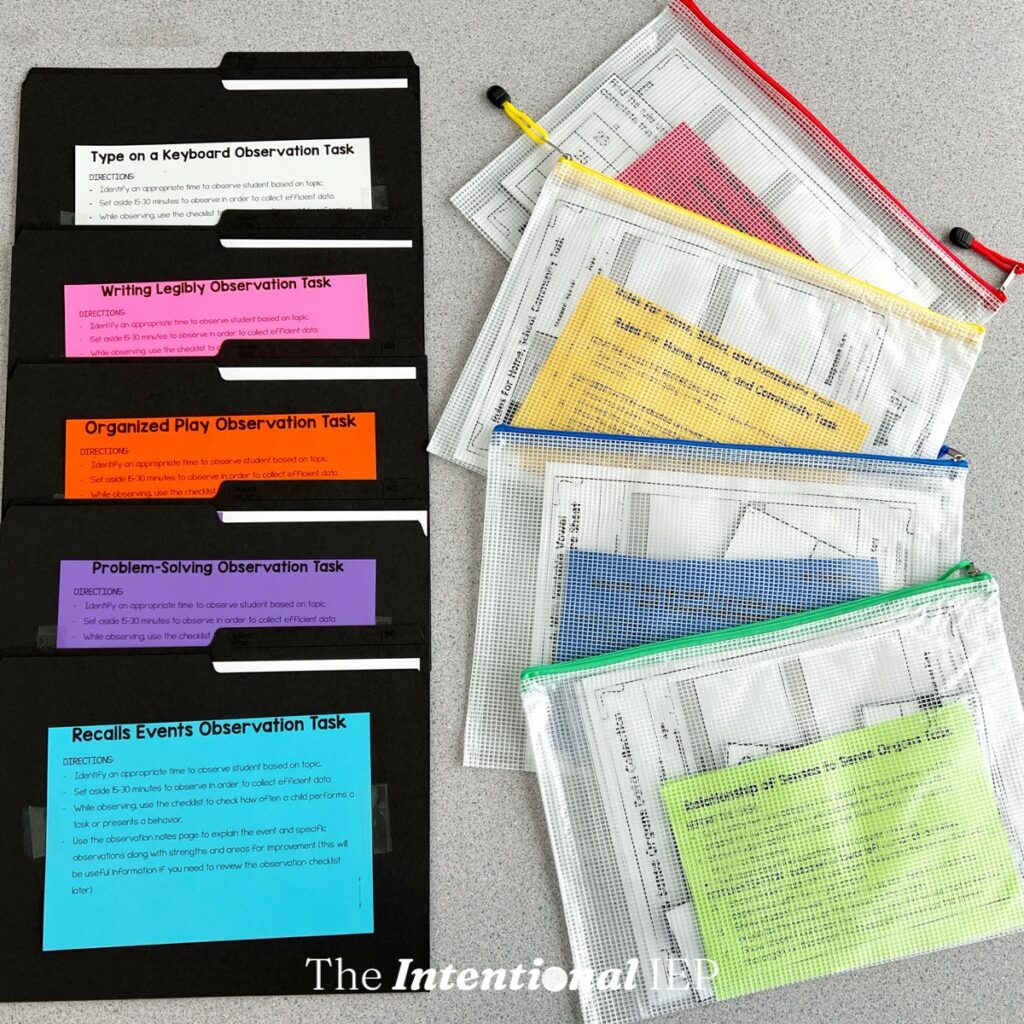
If you are still trying to wrap your head around IEP writing, and more specifically – writing IEP goals, I invite you to join us inside of Intentional IEP Writing. Inside this program, we take a deep dive into how to write an IEP, with specific lessons on goal and objective writing. Learn more here.
Overall, meaningful IEP goals start by building a relationship with the student and understanding his present levels and where he is going academically. Once that is done, it is easier to construct goals that help move him in that direction.
Ready to take the next steps on writing IEP goals? Here are a few additional blog posts to get you there:
- Do We Need “80% Accuracy” for All IEP Goals?
- 10 Terrible IEP Goals and How to Fix Them
- How Often to Practice IEP Goals
- What to Do When IEP Goals Aren’t Working
If every upcoming IEP sends you searching for the next goal, form, data sheet, training, or reminder, the problem probably isn’t that you need more resources. You need a better way to manage the process. The Intentional IEP System connects the tools, guidance, and workflows special educators need across the IEP lifecycle so you can stop managing IEPs one meeting at a time and start working more intentionally. See what intentional IEP management looks like →