
When it comes to setting IEP goals related to skills, determining the appropriate accuracy percentage is essential for measuring progress effectively. Should everything just be a blanket 80% accuracy for each and every goal without evaluating them? No, it absolutely should not (we’ll get there!).
I have encountered so many new-to-me IEPs where the student’s accuracy percentages were all 80%. While I struggled with writing accuracy in goals when I was fresh out of college and learning to write goals, I quickly learned that blanket percentages do no one any good – especially not the student.
To ensure accurate measurement, it is crucial to consider various types of goal criteria that align with the specific skill being addressed. Teachers must know their students in order to create goals and evaluation criteria for them that makes sense.
Types of Goal Criteria
Frequency
This criterion focuses on how often a student demonstrates the skill within a specified time frame.
Duration
This criterion measures the length of time a student can sustain the skill.
Accuracy
This criterion assesses the correctness of the skill performance.
Mastery
Mastery criteria indicate when a student has consistently demonstrated proficiency in the skill.
Choosing the Right IEP Goal Criteria
Selecting the most appropriate criteria depends on the nature of the skill and the student’s individual needs.
For example, for writing skills, accuracy criteria are often highly effective in measuring progress. Accuracy goals focus on the correctness of the written content, which is crucial for academic success.
If a student’s IEP goal is to increase their reading fluency by reading aloud for a specific amount of time each day, measuring the duration of their reading sessions can be an effective criterion.
Once you know the criterion by which you are measuring a student’s progress, you can then, more accurately, assign a threshold for the goal.
Establishing Baseline Data
Before setting a goal, it is essential to gather baseline data. In the case of a writing goal, this involves assessing the student’s current writing abilities both with and without support. You want to see what the student can do when they are supported and what they can do without support.
By understanding the starting point, teachers can set realistic and achievable SMART goals for improvement. If the student cannot write a word, having a goal that they will write a five-paragraph essay by the end of the year without support and with 80% accuracy makes no sense.
Set your students up for success by creating goals that they can actually achieve.
Analyzing Previous Progress
Reviewing data from the student’s past IEPs helps in determining the average progress made on writing goals. By examining trends and identifying areas of growth, teachers can make informed decisions about setting new goals.
If there is only minimal progress each year, expecting the student to make gains across three grade levels with 100% accuracy just sets them up to fail. Look back at what they have done to look forward toward what is reasonable for them to achieve.
Determining Accuracy Percentage
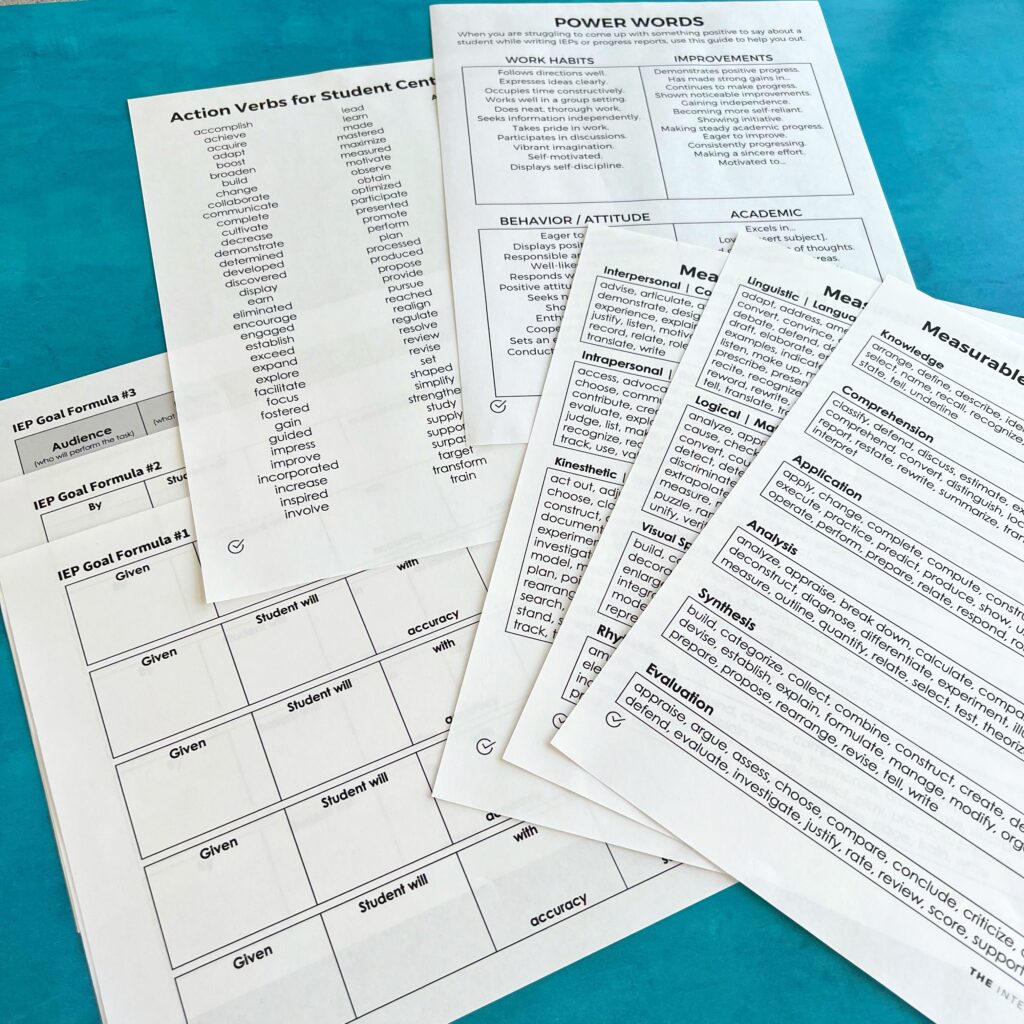
Setting a percent accuracy goal should be a thoughtful and individualized process. It should never be a standard, one-size-fits-all percentage like 80%. Instead, it should be based on the student’s specific needs, abilities, and rate of progress.
By considering all relevant factors, teachers can set challenging yet achievable accuracy goals that promote continuous growth.
Writing accuracy percentages for IEP goals requires careful consideration of goal criteria, baseline data, past progress, and individual student needs. By tailoring accuracy goals to each student, educators can provide targeted support and foster meaningful progress in writing skills.
If every upcoming IEP sends you searching for the next goal, form, data sheet, training, or reminder, the problem probably isn’t that you need more resources. You need a better way to manage the process. The Intentional IEP System connects the tools, guidance, and workflows special educators need across the IEP lifecycle so you can stop managing IEPs one meeting at a time and start working more intentionally. See what intentional IEP management looks like →