
You open your child’s report card and see A’s and B’s. Then you look at their IEP progress report and discover they are making little to no progress toward their goals. How can both things be true?
If you’ve ever felt confused by an IEP progress report, you’re not alone. Many parents assume that good grades automatically mean their child is making progress in special education. Unfortunately, that is not always the case.
Understanding how progress reports work can help you ask the right questions, advocate effectively, and make informed decisions as a member of your child’s IEP team.
What Is an IEP Progress Report?
An IEP progress report is a document that tells parents how their child is progressing toward the annual goals outlined in their Individualized Education Program (IEP). Unlike a report card, which measures performance in academic classes, a progress report measures growth toward specific goals that were developed to address a student’s disability-related needs.

Depending on your school district, progress reports may be sent home quarterly, trimesterly, or at the same time as report cards. The timeliness will be outlined in your child’s IEP.
A quality progress report should provide information about:
- The student’s current level of performance on each goal
- Data collected to measure progress
- Whether the student is on track to meet the annual goal
- Any relevant comments from service providers or teachers
The purpose of the report is to help parents understand whether the supports and services outlined in the IEP are helping their child make meaningful progress.
Why Grades and IEP Progress Are Not the Same Thing
One of the biggest misconceptions parents have is that their child’s grades tell the whole story, which isn’t the case. A report card is going to reflect how a student is performing in their classes. An IEP progress report reflects how a student is progressing toward specific IEP goals and with their special education supports and services.
This means that a student can earn excellent grades while still struggling to make progress on IEP goals. For example, a student may receive an A in English Language Arts because they are receiving accommodations such as extra time, modified assignments, guided notes, or reading support. At the same time, they may be making limited progress toward a reading fluency goal or written expression goal. Similarly, a student may pass all of their classes while continuing to struggle with executive functioning, communication, behavior, social skills, or other disability-related needs.
Grades provide one piece of information. Progress reports provide another. And parents should look at both documents (re: sets of data) together to get a complete picture of how their child is doing.
What Parents Should Look For in a Progress Report
Not all progress reports provide the same level of detail. As you review your child’s report, consider these questions (and don’t forget to look for these progress report red flags).
Is There Actual Data?
Terms like “making progress,” “improving,” or “doing better” may sound encouraging, but they don’t tell you very much. Meaningful progress reports should include objective data. Examples include:
- Percentage accuracy
- Number of correct responses
- Frequency counts
- Benchmark scores
- Reading levels
- Measurable observations
Data will help you understand exactly where your child started, where they are now, and whether they are moving towards mastery of their goals.
Is Your Child On Track to Meet the Goal?
Annual goals are designed to be achieved within the IEP year. If the progress report shows very little growth halfway through the year, it may be time to ask questions about whether additional supports or adjustments are needed.
A child does not need to master a goal immediately, but there should generally be evidence of steady progress over time.
Are All Goals Being Reported?
Every active IEP goal in the IEP should have a progress update. If information appears to be missing, you have the right to ask for clarification and additional documentation.

What If Your Child Is Not Making Progress?
A lack of progress does not automatically mean someone made a mistake or that absolutely no progress has been made. However, it does signal that the IEP team should take a closer look. When progress stalls, the team may need to examine several factors.
Questions to consider include:
- Is the goal appropriate for the student’s current needs?
- Is the goal measurable?
- Is the instructional approach effective?
- Are services being delivered as written in the IEP?
- Does the student need additional supports?
- Does the frequency or intensity of services need to change?
The purpose of progress monitoring is not simply to collect data. It is to use that information to make decisions that help students succeed… and the data helps us understand if what’s in the IEP is working or not.


Can Parents Request an IEP Meeting?
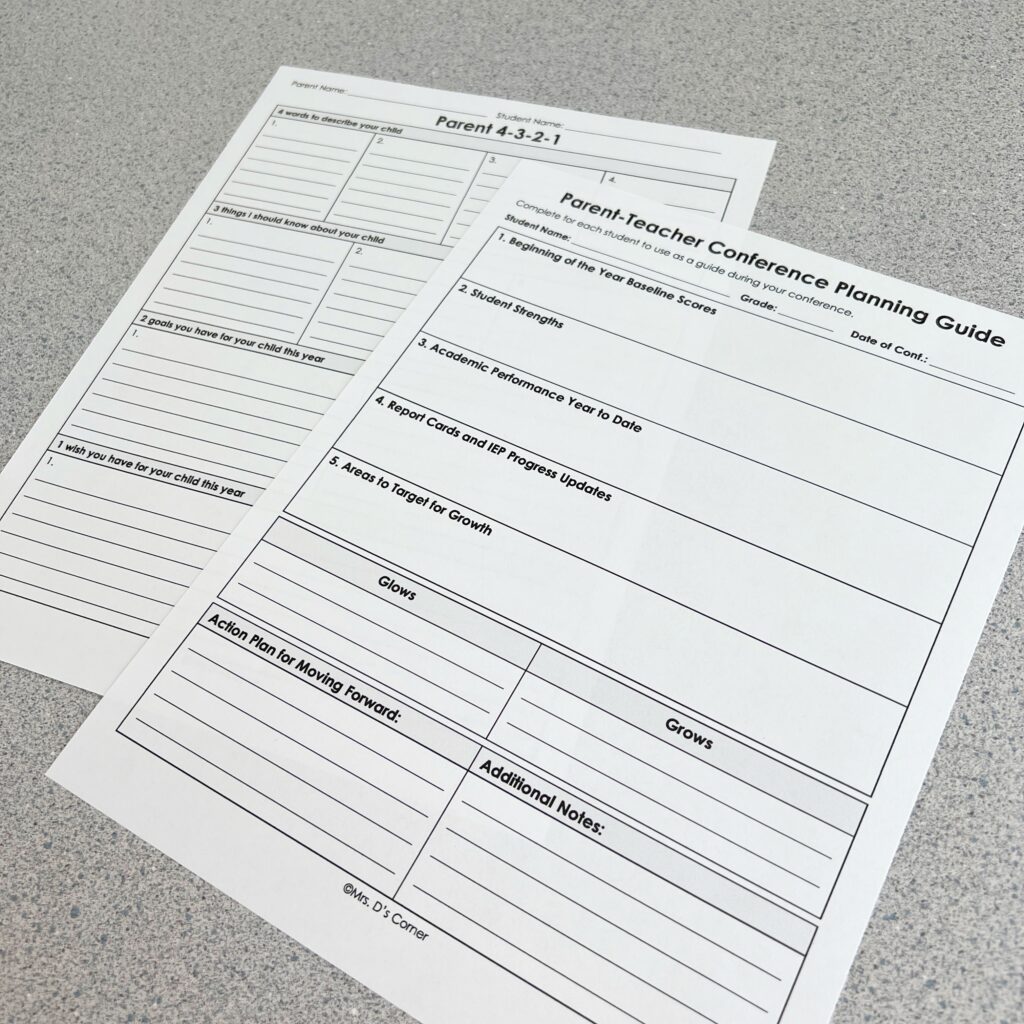
Absolutely! Parents are equal members of the IEP team and you do not have to wait for the annual review meeting if concerns arise. If you have questions about your child’s progress, you can request an IEP meeting at any time.
It is generally best, and I highly recommend, to make the request in writing so there is a clear record of communication.
During the IEP meeting, you can discuss concerns, review data, ask questions, and collaborate with the team on possible next steps. Waiting until the annual meeting is not necessary if you believe your child needs additional support.
Ask to See the Data
One of the most powerful questions a parent can ask is: “Can I see the data used to measure this goal?”
Schools should have documentation supporting the progress reported on the IEP. Depending on the IEP goal, this may include:
- Progress monitoring records
- Work samples
- Assessment results
- Behavior tracking sheets
- Service logs
- Teacher observations

Reviewing the underlying data often provides valuable insight into what is working and what may need to change.
What If Communication Has Been Difficult?
Many parents become frustrated when emails go unanswered or communication feels inconsistent. If you have concerns about your child’s progress, start by reaching out to the case manager or special education teacher. If communication remains difficult, you may consider contacting the building administrator or special education coordinator.
Whenever possible, communicate in writing and keep copies of emails, notes, and correspondence. Documentation helps create a clear record of concerns and communication efforts.
Keep Your Own Records
One of the simplest ways parents can stay organized is by maintaining a special education binder or digital folder. Consider keeping copies of:
- Current and previous IEPs
- Progress reports
- Report cards
- Evaluations
- Communication logs
- Emails
- Meeting notes
- Work samples
Having information organized, like in a Parent IEP Binder, makes it easier to identify patterns, prepare for meetings, and advocate effectively.
Questions to Ask at Your Next IEP Meeting
If you’re concerned about your child’s progress, these questions can help guide the conversation:
- What data supports the progress reported on this goal?
- Is my child on track to meet this goal by the end of the IEP year?
- How often is progress being monitored?
- What interventions are currently being used?
- Are services being delivered as written in the IEP?
- What changes should we consider if progress remains limited?
- How can I support this goal at home?
These questions encourage collaboration and help ensure decisions are based on data rather than assumptions.
IEP progress reports are much more than paperwork. They are an important tool for understanding whether your child’s special education program is working as intended.
If a progress report shows limited progress, don’t panic. Instead, use it as an opportunity to gather information, ask questions, and work with the IEP team to determine the best path forward.
Remember, grades tell part of the story. Progress reports tell another part. Looking at both together can help parents gain a clearer picture of their child’s growth and ensure that the support outlined in the IEP is leading to meaningful progress over time.
Writing effective IEPs is so much easier when you have the right tools in your toolbox! Inside The Intentional IEP, you’ll get access to expert-led trainings, a searchable IEP goal bank with IEP Screeners, and ready-to-use resources that take the guesswork out of IEP writing and implementation. With the right tools at your fingertips, you’ll save time, reduce stress, and feel confident in creating IEPs that truly support your students. Join today and fill your IEP toolbox with everything you need!