
If you’ve ever spent hours preparing for an IEP meeting only to feel rushed or overwhelmed when the day arrives, you’re not alone. Between gathering data, coordinating with team members, writing goals, and ensuring compliance, it’s easy for the prep process to take over your schedule. But with some smart planning strategies, you can streamline the process, reduce stress, and actually save time without sacrificing quality.
Below are some of the best tried-and-true time-saving tricks that special education teachers and case managers use to keep IEP meetings efficient and organized.
Start Early and Plan Ahead
One of the simplest but most effective strategies is to start preparing well before the meeting date. Setting up a clear calendar of annual and triennial IEPs for the entire school year can help prevent last-minute scrambles. Some teachers begin drafting goals a month or two before the scheduled meeting, gradually adding information as it becomes available. This way, by the time the meeting rolls around, the bulk of the work is already complete.
Starting early also gives time for any required specialists—such as transition coordinators or related service providers—to review and contribute their sections before the meeting. This avoids last-minute delays and ensures the document is accurate and comprehensive.
Use Parent and Teacher Input Surveys
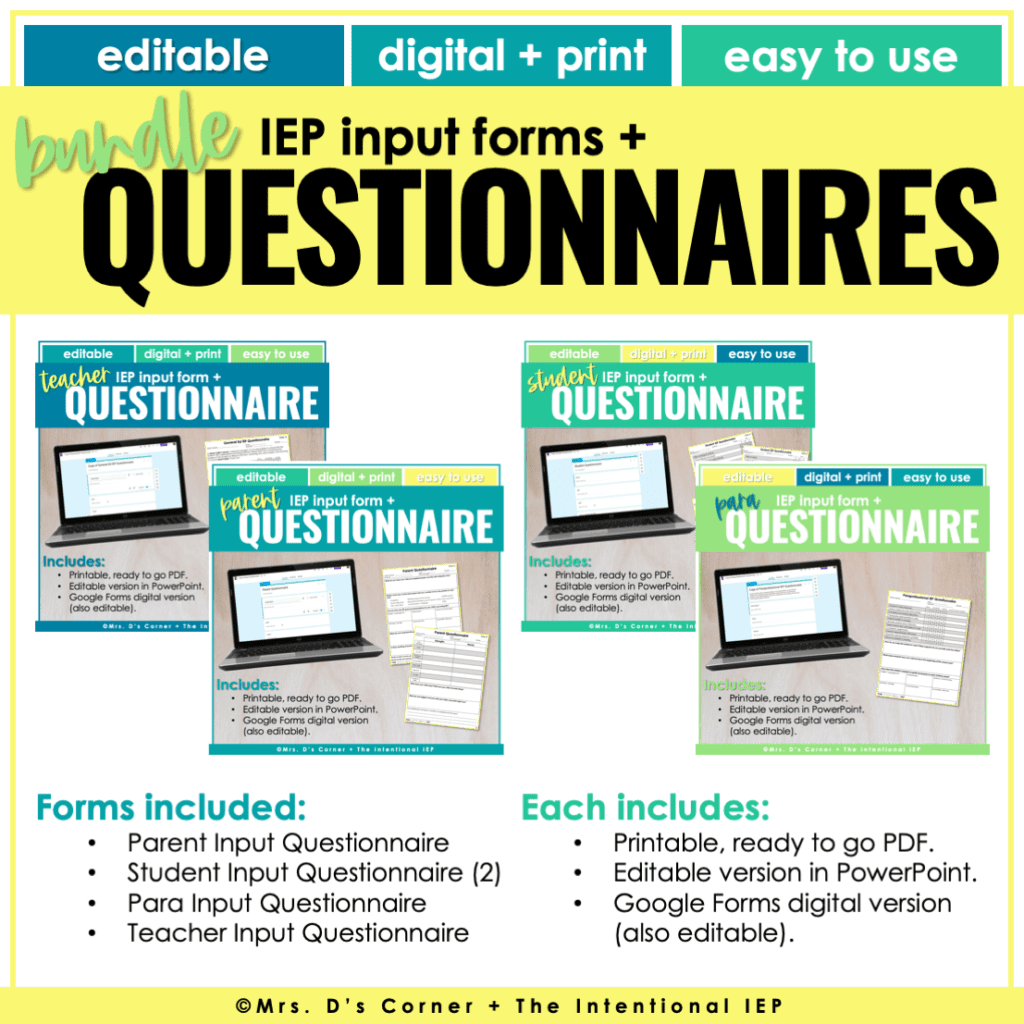
Gathering input ahead of time is a major time-saver during the meeting itself. Sending out parent and teacher surveys a few weeks before the IEP helps collect valuable insights without taking up meeting time. When you already know what parents and teachers are thinking, you can focus the discussion on finalizing and agreeing on plans rather than spending a significant portion of the meeting gathering feedback.
Surveys can be simple Google Forms or printable questionnaires. The key is to send them out early enough so that everyone has time to thoughtfully respond.
Draft Before You Enter the IEP System
Many teachers prefer to work in Word, Google Docs, or PowerPoint before entering information into their district’s IEP software. Drafting outside of the official system has a few advantages: it gives you more flexibility to wordsmith goals and present levels, allows for easier note-taking, and protects your work in case the system crashes or wipes your entries.
Some teachers create a PowerPoint or Google Doc “cheat sheet” where they organize all the data—PLOPs, goals, objectives, notes from parent calls, and other relevant information. During the meeting, they can follow along with their cheat sheet to ensure nothing gets missed. Afterward, they copy and paste the finalized content into the IEP system. This approach keeps everything organized and reduces the risk of losing work due to technical glitches.
Keep Old IEPs Handy and Highlight Changes
Having the previous IEP easily accessible can save a surprising amount of time. Many educators print or open the old IEP in a separate tab and highlight any sections that are changing, such as accommodations, goals, or services. This makes it easier to write Present Levels of Performance (PLOPs), update goals, and draft Prior Written Notices (PWNs). It also helps ensure nothing gets accidentally dropped in the new document.
In districts where software systems have a tendency to “wipe” content unexpectedly, keeping the old IEP open in Adobe or another viewer allows you to cross-check and make sure all the important details carry over accurately.
Call Parents Before the Meeting
A short parent phone call before the IEP meeting can significantly cut down on meeting time. By reviewing proposed goals, getting parent input, and clarifying expectations ahead of time, you avoid long, drawn-out discussions during the meeting itself. Parents have time to think about the information without the pressure of a formal setting, which often leads to smoother conversations and quicker agreements on meeting day.
This strategy also builds trust and rapport with families, as they feel included and heard well before the formal meeting begins. Don’t forget to document the contact!
Send Drafts to the Team Ahead of Time
Another time-saver is sharing a draft IEP with the entire team about a week before the meeting. This gives team members a chance to review the document, ask questions, and suggest edits in advance. During the meeting, you can focus on reviewing key points and finalizing details rather than spending time reading through entire sections aloud.
Even if your district has specific rules about what can be shared, sending draft goals, proposed accommodations, or updated data summaries in advance helps everyone arrive more prepared.
Organize Information in a Tabbed System
Some teachers have found success using a tabbed Google Document to organize all the components of the IEP. One tab is dedicated to drafts, another to progress report comments, and another to diagnostic data and grades. Having everything organized in one digital location keeps the process smooth and prevents the need to jump between multiple windows, folders, or stacks of paper during prep or the meeting itself.
Work Smarter, Not Harder with Copy and Paste
Once your drafts are finalized, using copy and paste strategically can cut prep time dramatically. Instead of typing directly into the often clunky IEP software, draft everything once in a flexible format, then paste it into the required fields. This minimizes formatting frustrations and ensures your work is backed up elsewhere in case something goes wrong.
Reduce Meeting Day Stress
All of these strategies ultimately aim to make the actual IEP meeting run more smoothly. When goals are drafted, input has been collected, and the team has reviewed materials ahead of time, meetings can focus on meaningful discussion rather than paperwork. That means fewer tangents, less scrambling for information, and less stress for everyone involved.
You Can Save Time
IEP meetings will always require careful preparation and thoughtful planning, but they don’t have to consume every spare moment. By starting early, gathering input ahead of time, drafting outside of the official system, and organizing materials strategically, you can reclaim valuable hours and make the IEP process more efficient.
These time-saving tricks not only help you stay on top of deadlines—they also give you more space to focus on what matters most: collaborating with families and creating strong, individualized plans that support student success.

Writing effective IEPs is so much easier when you have the right tools in your toolbox! Inside The Intentional IEP, you’ll get access to expert-led trainings, a searchable IEP goal bank with IEP Screeners, and ready-to-use resources that take the guesswork out of IEP writing and implementation. With the right tools at your fingertips, you’ll save time, reduce stress, and feel confident in creating IEPs that truly support your students. Join today and fill your IEP toolbox with everything you need!