
You know the student who understands the lesson, can explain the concept, and absolutely can do the work… but somehow the assignment is still missing, unfinished, forgotten, or never even started? The problem may not be motivation at all. Executive functioning could be the barrier getting in the way.
Executive function challenges can affect a student’s ability to start a task, remember multi-step directions, organize materials, manage time, sustain attention, monitor their own progress, and regulate emotions when a task becomes difficult or overwhelming.
And that’s an important distinction to make. Executive functioning skills are developmental, brain-based skills—not a measure of how much a student cares, how hard they’re trying, or how intelligent they are. When these skills haven’t developed enough to meet the demands we’re placing on a student, simply telling them to try harder isn’t going to close the gap.
They may need explicit instruction to build the skill and accommodations that remove the barrier while they’re learning it.
What Are Executive Function Skills?
Executive function (EF) skills are the brain-based processes that help students plan, organize, initiate tasks, manage time, sustain attention, regulate emotions, and monitor progress… just to name a few.
These skills live in the prefrontal cortex and continue developing into early adulthood. For many students, especially those with ADHD, autism, anxiety, or learning disabilities, these skills require structured support.
Why Executive Function Accommodations Matter
Executive function accommodations matter because school places demands on executive functioning all day long.
Think about how many things we expect students to manage beyond simply knowing the academic content. They have to remember directions, gather materials, decide where to start, ignore distractions, transition between activities, estimate how much time they have, keep track of unfinished work, organize information, monitor their own progress, and remember to actually turn the assignment in when they’re finished.
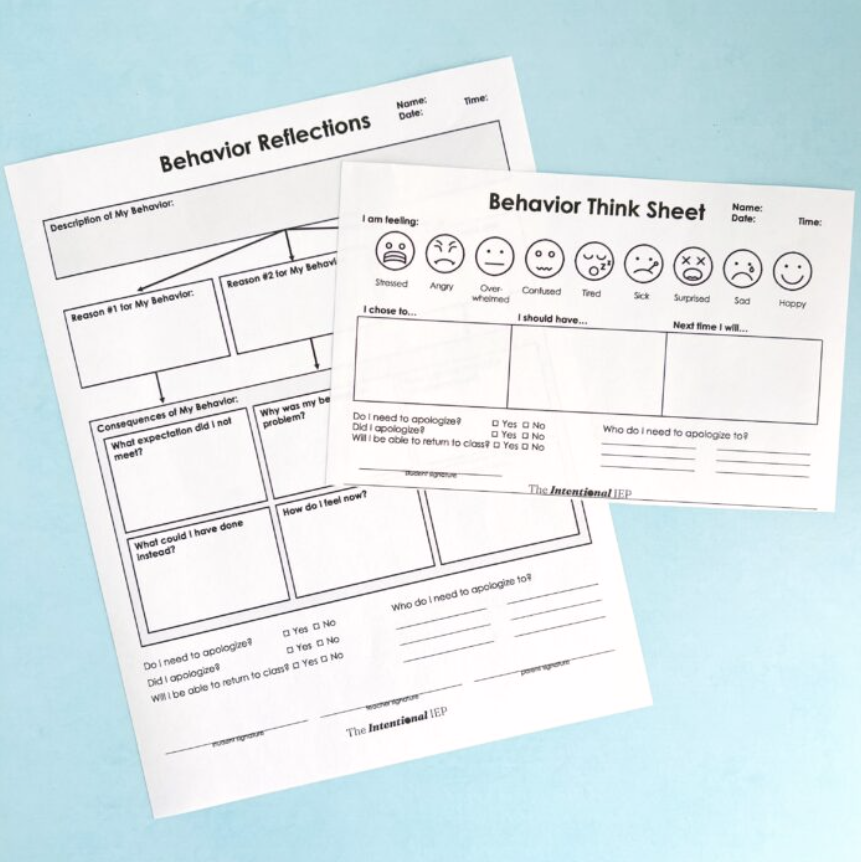
For a student with executive functioning challenges, those demands can become barriers to demonstrating what they actually know and can do.
When chosen based on the student’s individual needs, executive function accommodations can:
- Reduce a student’s cognitive overload
- Increase task completion
- Support student independence
- Improve emotional regulation
- Align with IEP and 504 goals
Remember: accommodations do not lower the learning expectations for a student. They change how a student accesses instruction, participates in learning, or demonstrates what they know without changing what the student is expected to learn.
Executive Function Accommodations That Work in Real Classrooms
Just as with any disability, we shouldn’t be choosing accommodations because of the disability one student has or what works for other students. We need to choose supports based on student need. Here are some practical, classroom-ready accommodations you can implement immediately to help your students with executive function tasks and learning.
Organization Supports
Students with EF challenges often struggle with materials management. Effective accommodations include:
- Color-coded folders by subject
- Visual locker checklists
- Binder organization templates
- End-of-day clean-out routines
- Digital assignment trackers
Avoid vague expectations like: “Be more organized.” Instead, you’ll want to teach the system explicitly to the student. Task analysis‘ help here!
Task Initiation Supports
Students who stare at blank pages are often stuck in initiation paralysis. Some helpful accommodations for this might include:
- “First step” prompts written on assignments
- Chunked directions
- Visual task breakdown cards
- Timed work sprints (5–10 minutes)
- Teacher check-in at start of work time
Most times, students don’t need motivation, they just need a starting point. These accommodations help students with that.
Time Management Accommodations
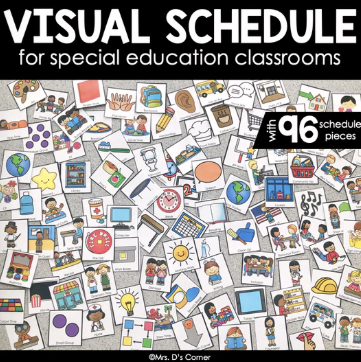
Time blindness is common in students with ADHD and EF challenges. Supports for these students might include:
- Visual timers
- Time estimation practice
- Assignment calendars
- Extended time (when appropriate)
- Backward planning templates
We must teach students to see, understand, and manage time. We cannot assume they feel it.
Working Memory Supports
Students with EF deficits may forget multi-step directions within seconds. A few accommodations you can try include:
- Written directions
- Visual step cards
- Repeated instructions
- Anchor charts
- Recorded lessons
If directions disappear, you can almost expect the student’s performance to decrease and/or disappear. For this reason, we should strive to make instructions a permanent part of the lesson.
Emotional Regulation Supports
Executive function is closely tied to emotional control, and many of our students also struggle with emotional regulation. Accommodations to support students in this area can include:
- Calm-down spaces
- Visual emotion scales
- Break cards
- Flexible seating
- Pre-correcting expectations
A regulated brain can access executive skills. A dysregulated brain cannot… a dysregulated brain cannot learn.
Teaching Executive Function Skills vs. Accommodating Them
When we think about executive function skills, there are two prongs: accommodation, or supporting, them and instruction to teach them.
The distinction is important to know: Accommodations support access, while instruction builds skill. Some students will benefit from both, so it’s important to remember when we write student IEPs.
Think about a student who struggles to complete a multi-step assignment. We could teach that student how to break a large task into smaller steps, estimate how long each step will take, create a plan, and check their progress along the way. At the same time, the student may still need accommodations such as written directions, a visual checklist, shortened chunks of information, intermediate deadlines, or reminders.
Those aren’t competing approaches. One helps the student access what they need right now; the other helps develop skills they’ll be able to use in the future.
Executive functioning skills can be explicitly taught, modeled, practiced, and reinforced. Students shouldn’t simply be told to “get organized,” “use your time wisely,” or “check your work.” Those directions assume the student already knows how to do those things.
Instead, we can explicitly teach skills such as:
- Planning strategies: Teach students how to look at a task, identify what needs to happen, determine the order of the steps, gather necessary materials, and make a plan before beginning.
- Goal setting: Help students learn how to identify an appropriate goal, determine what success will look like, and break a larger goal into smaller, achievable steps.
- Self-monitoring: Teach students to stop during a task and ask themselves questions such as, Am I following my plan? Am I still on task? Did I complete each step? Do I need help?
- Reflection: Give students opportunities to look back at their performance and determine what worked, what didn’t, and what they might do differently next time.
These skills don’t develop simply because we give students a planner, checklist, timer, or graphic organizer. Students may need explicit instruction in how to use the tool and the strategy behind it. Research and educational guidance on executive functioning similarly emphasize explicit instruction and scaffolding in planning, goal setting, organization, and self-monitoring.
At the same time, we shouldn’t require students to independently perform a skill they haven’t developed yet before giving them access to support. Accommodations can reduce the executive functioning load of a task so the student’s disability-related needs don’t unnecessarily interfere with learning. Common areas we may need to accommodate include:
- Organization deficits: A student who has difficulty keeping track of materials, assignments, or information might use color-coded folders, checklists, designated locations for materials, assignment trackers, or structured organizational routines.
- Working memory limitations: A student who has difficulty holding information in working memory might receive written directions, visual step cards, reference materials, repeated directions, or directions broken into smaller chunks. Instead of requiring the student to remember everything internally, we make important information available externally.
- Time management challenges: A student who struggles to understand or manage the passage of time might use visual timers, intermediate deadlines, assignment calendars, reminders, or additional time when appropriate. A large project could also be divided into smaller sections with individual due dates rather than relying on the student to independently manage one distant deadline.
And here’s where the distinction becomes especially important:
Providing the accommodation does not mean we stop teaching the skill. Teaching the skill does not mean we’re ready to remove the accommodation.
The goal isn’t to make students struggle without support in the name of “independence.” Instead, we can provide the access they need while intentionally building the skills that may allow them to become more independent over time.
So, when you’re considering executive functioning needs as part of an IEP, ask two different questions:
What does this student need us to TEACH?
What skill or strategy could we explicitly teach, practice, monitor, and help the student use with increasing independence?
Then ask: What does this student need us to SUPPORT?
What barrier exists right now that we can reduce so the student can access instruction and demonstrate their knowledge while that skill is still developing?
Sometimes the answer will be one or the other. Very often, the answer will be both.
What Executive Function Is Not
When you’re thinking about executive function challenges, it’s important to remember that what you’re seeing isn’t automatically laziness, defiance, carelessness, or a lack of intelligence. Executive functioning skills are brain-based skills that help us plan, organize, initiate tasks, manage time, hold information in mind, regulate our attention, monitor our work, and adjust when something isn’t working.
And when those skills are difficult for a student, the struggle often shows up as behavior.
For example: if the underlying difficulty is task initiation, we can teach and support task initiation. If it’s planning, we can explicitly teach planning strategies. If it’s working memory, we can reduce the amount of information the student has to hold internally. If it’s organization, we can build systems that make organization more manageable while explicitly teaching the student how to use them.
That doesn’t mean every challenging behavior should automatically be attributed to executive functioning, nor does it mean students shouldn’t have expectations or accountability. It means we should investigate the skill demands underneath the behavior before deciding that motivation, attitude, or effort is the problem.
Because when an executive functioning need is treated only as a behavior problem, a student can receive consequence after consequence for something they haven’t yet been taught or supported to do successfully. And support is what gives us the opportunity to change the outcome.
Executive function accommodations are about building systems so students can function independently. These supports can help provide structure, predictability, and clarity… which is important because structure reduces anxiety, predictability increases productivity, and clarity will improve student follow-through.
When we provide accommodations intentionally, we create safer classrooms, more confident learners, and give our students greater independence. And at the end of every day, that’s our goal.
Writing the IEP is only one part of managing it. The Intentional IEP System helps special education teachers manage the work before, during, and after the meeting—from baselines and goals to timelines, implementation, progress monitoring, and everything in between. Instead of piecing together another resource every time something comes up, you’ll have one educator-led system designed to help you know what to do, have what you need, and know what’s next. See how The Intentional IEP System works →