
With virtual learning comes the need for adjusted IEP accommodations to help students be successful. Figuring out what those accommodations should look like is challenging, though. This list of possible accommodations for virtual learning might help your IEP team when moving students into this Least Restrictive Environment (LRE):
1. The student can take breaks throughout the day/class period.
Getting up and moving every 15-20 minutes can work wonders for all of your students – not just those with IEPs. However, students who struggle with maintaining focus will especially benefit from built-in breaks where they are allowed to stand up, move around, and get out their wiggles.
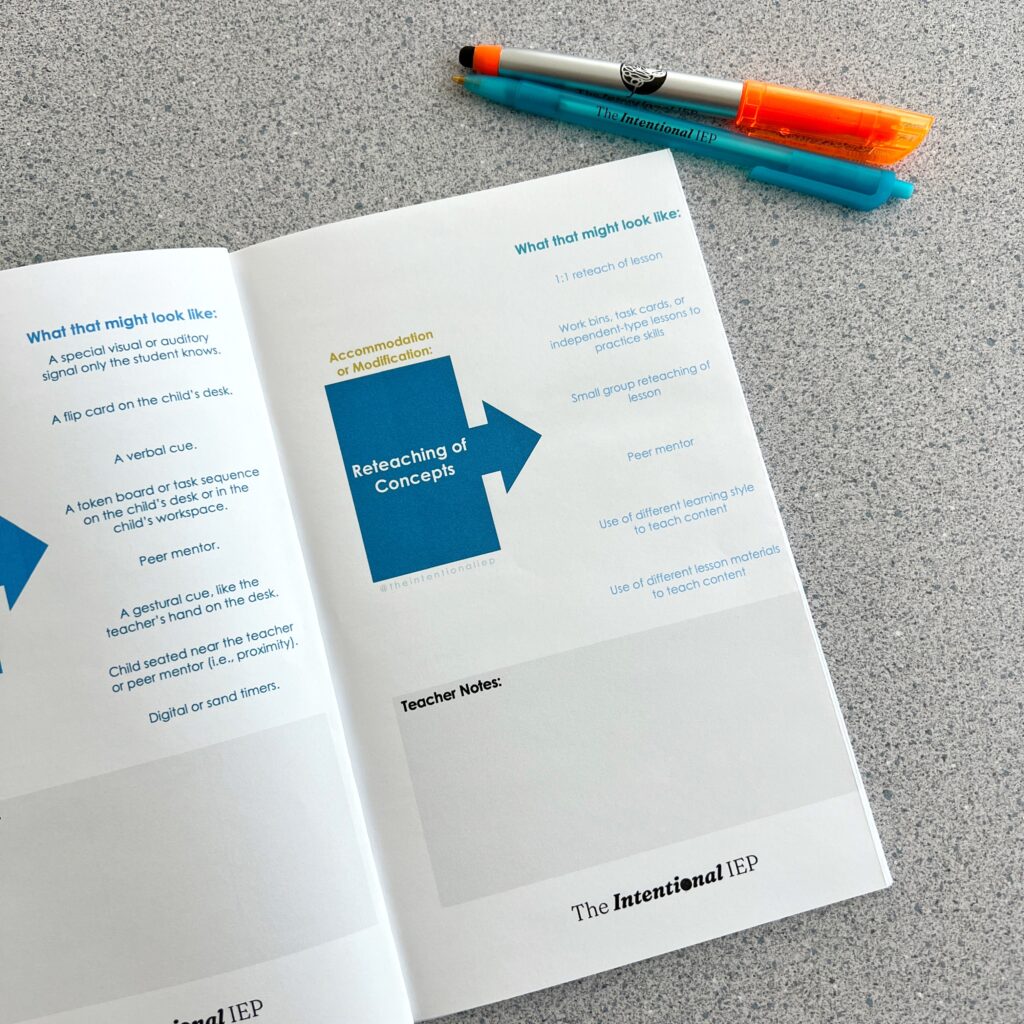
2. Monitor brightness may be adjusted.
Students who are prone to headaches or migraines might benefit from reducing the brightness of their screens. This helps to reduce eye strain and can mitigate potential headaches.
3. The student has access to a personal assistive writing implement.
If students typically use pencil grips in the classroom, one should be provided for them at home.
4. The student may use speech-to-text software.
Many students need scribes for their work, but it can be challenging to provide that in a virtual setting. Speech-to-text software acts as a virtual scribe and helps students communicate their ideas without having to type or write them.
5. The student has access to alternative seating.
While in the classroom, students may have various seating options to help them stay on task and focus. Including that as an accommodation for virtual learning ensures that students are not relegated to desk chairs all day and permits parents to allow their children to sit on exercise balls or even under the table for distance learning.
6. Students may use text-to-speech software.
While having software that transcribes students’ ideas is important, equally as important is software that reads text to them. This is especially good for your students with dyslexia or other reading disabilities.
7. Visual distractions while teaching virtually will be reduced.
A distraction reduction accommodation could be even more specific to include only one slide per screen or limiting the slide to be in black and white versus many colors and graphics. It might also mean that student cameras are off, and the only one visible is the teacher.
8. Students may have a reduced number of assignments.
Completing an assignment in class with a teacher’s assistance can be challenging for some students, but when they are at home, and there is no direct teacher supervision, it can be even more difficult. Reducing the number of assignments or the amount of work on each task can set them up for distance learning success.
9. The student may use a privacy shield or study carrel.
By reducing the visual clutter outside of their screens, students can focus on their tasks more. A study carrel is a great way to limit what they see, provide privacy, and help them concentrate on assignments or virtual classes.
10. The student may have multiple attempts to complete the assignment.
One attempt at an assignment may not be enough for students who are learning virtually. They may need to complete a task, get feedback, and re-attempt it. This allows them to demonstrate what they learned after getting helpful feedback and gives a more accurate depiction of their understanding.

Whatever accommodations you use with your students while distance learning, make sure they are tailored specifically for each student. While it may not be the best scenario for delivering instruction for some students, it can still be an effective way to teach. The right accommodations can help.
When you’re ready to move to virtual instruction, here’s how you can address play IEP goals virtually. And if you ever have to hold a virtual IEP meeting, we’ve got your back too!
Your district’s IEP platform gives you a place to document the IEP. The Intentional IEP System was built for the work happening around it. Created by a veteran special educator, the system brings together practical workflows, professional guidance, screeners, goals, data tools, planning support, and more to help you confidently manage the IEP process without handing your professional judgment over to software. Explore the educator-led IEP management system →